Executive functioning skills are deeply connected to behavior. When a child or teen struggles with executive functioning skills, it can impact everything. In the classroom, a student may more easily become distracted, lose materials or assignments, and have difficulty even getting started on a task. A child or teen might also struggle to manage their emotions, leading to outbursts or impulsive choices. While every individual person exhibits these behaviors in their own unique way, one thing is clear – executive functioning challenges often mean behavior challenges too in some way.
With that said, it’s important consider behavior challenges through an executive functioning lens. Ultimately, this can make a significant difference in our attitude and our approach. Instead of seeing challenging behaviors as “poor choices”, we can begin to see them as executive functioning skill deficits. In turn, this can help us to teach skills, implement supports, and provide meaningful strategies.
Executive Functioning Challenges and How They Impact Behavior
Executive functioning challenges can often look like “poor behavior” or “poor choices” but they’re not. When a child doesn’t have solid skills to manage their emotions or get started on tasks effectively, this can sometimes look like the child is just refusing to do what they’re supposed to do. But executive functioning challenges are skill deficits. This means that when someone has an EF skill deficit, they lack the understanding or practice required to do what we are asking of them.
Executive functioning skills work together. If a child is struggling with focus and attention, it’s likely they are also going to struggle with getting started on a task (task initiation) and sticking with it (perseverance). Understanding this is essential to providing supports for all the various EF skills a student might need.
Every child’s executive functioning profile is unique. The way one child’s executive functioning challenges manifest could be slightly different from another child. That’s because we all have our own unique profile of strengths and challenges. Understanding each individual child or teen is incredibly important to getting to the bottom of what they need to be successful.
Stress greatly impacts executive functioning. Executive functioning relies on our prefrontal cortex, the area of our brain responsible for planning and decision-making. When we get stressed or emotionally overwhelmed, the prefrontal cortex shuts down. This can create a very challenging cycle for kids struggling with EF skills – a student might try to start a task, get stressed when they can’t get started, and ultimately struggle more. This alone could create a number of behavior challenges, all stemming from difficulties with executive functioning skills.
Executive functioning skills can be learned. Skills like planning, organization, and time management aren’t innate. They are built with modeling and practice over time. This means that many kids and teens still need support with these skills, but it also means that we can teach, practice, and build them together. And that’s a good thing. Learn more about lessons and activities to boost executive functioning skills.
Young brains are still under construction. The executive functioning area of the brain doesn’t finish developing until sometime in a person’s 20s. It’s incredibly important to remember that kids and teens are still building these skills every day.
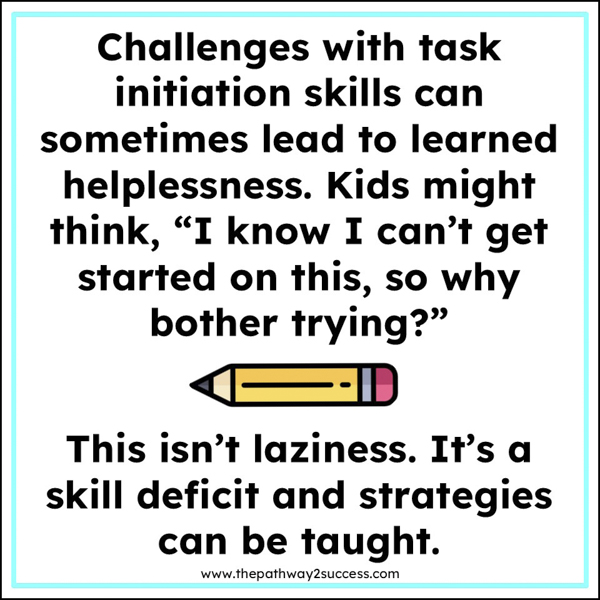
Kids and teens can develop learned helplessness. When tasks and responsibilities are too challenging, it can cause kids and teens to just give up. Over time, this creates a cycle of learned helplessness. The idea is – “I can’t do this, so why bother?” When kids and teens feel this way, it can be frustrating for everyone involved. The key here is providing supports and strategies to help learners build a growth mindset.
Punishments and consequences won’t solve the problem. A teen who comes to class with a disorganized notebook is not suddenly going to know how to organize their materials just because they get a detention or other punishment. This isn’t to say that consequences aren’t ever necessary – they certainly are. Logical consequences are an important part of developing responsibility. But it’s important to be mindful of when kids need supports and strategies instead of consequences. Many times, they need them more than we might realize at first glance.
Practicing skills and strategies is key. Even after you’ve explained how, many learners might not be able to independently organize their binder or plan for a long-term project. They might not have be able to stay calm in times of stress or use strategies to get started on something they don’t really want to do. Practice is key, and we all need lots of it for new habits to stick.
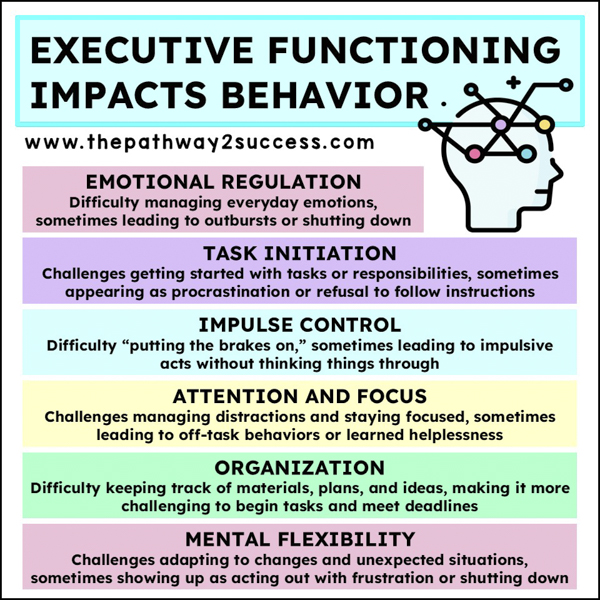
Here is a breakdown of some executive functioning skill deficits and how they can impact behavior with kids and young adults:
Emotional Regulation
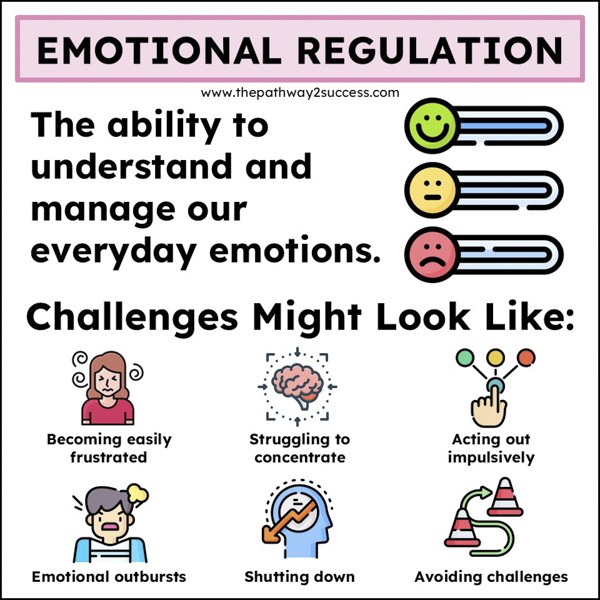
Emotional regulation is the ability to understand and manage our everyday emotions. It goes without saying that being able to regulate our emotions is a foundational skill. It’s the ability that helps us keep working through a challenge even when we’re frustrated. It also the ability that enables us to stay calm during a problem, disagreement, or stressful event.
How Emotional Regulation Deficits Affect Behavior
When kids and teens struggle with emotional regulation skills, they have difficulty coping with those big feelings. In turn, those feelings come out in other (often more challenging) ways. This might look like:
- Becoming easily overwhelmed or frustrated
- Having explosive outbursts or meltdowns
- Acting out aggressively towards others
- Struggling to concentrate or focus on tasks
- Shutting down
Strengthening Emotional Regulation Skills
We all could use strategies and supports to strengthen emotional regulation skills. That’s because more effective emotional regulation helps us do and feel our best. Here are a few emotional regulation activities to try:
- Teach and practice coping strategies like positive self-talk, mindful breathing, and stretching
- Start the day with an emotions check-in
- Integrate mindfulness practices into the day
- Exercise often
- Encourage positive sleep habits
- Practice problem-solving through real-life scenarios
Task Initiation
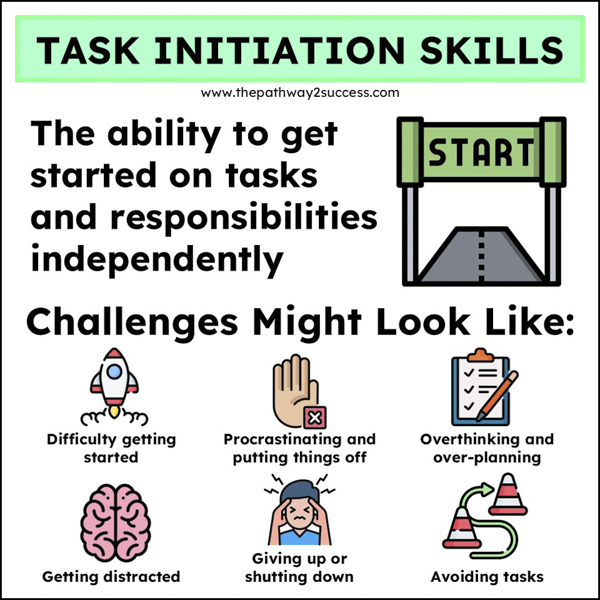
Task initiation is the ability to start something on your own. It goes without saying that this skill matters. We use this ability to start daily tasks, chores, and activities, even if we don’t feel like doing them in the moment. It’s also the skill we use when we take those scary first steps to begin working on a goal.
How Task Initiation Impacts Behavior
Task initiation challenges can manifest in many different ways for kids and teens. Here are a few examples:
- Difficulty getting started on tasks or assignments
- Procrastinating and putting off important tasks, responsibilities, or chores until later
- Overthinking or over-planning before starting a task, leading to “analysis paralysis”
- Avoiding starting tasks or activities due to fear of failure
- Learned helplessness (“I can’t figure out how to start, so why bother?”)
- Getting distracted with other activities instead of starting a task or activity that needs to be done
Task Initiation Strategies
We can teach multiple strategies to help kids and teens work through task initiation challenges.
- Break down bigger tasks into smaller ones
- Start just one small step at a time (don’t focus on the big task, but the step in front of you)
- Exercise or move body before starting a task
- Provide clear and simple expectations for assignments
- Offer choices and autonomy where possible
- Practice mindfulness to calm the body and mind
- Celebrate successes and wins
- Plan mini-rewards for finishing tasks, chores, and responsibilities
Impulse Control
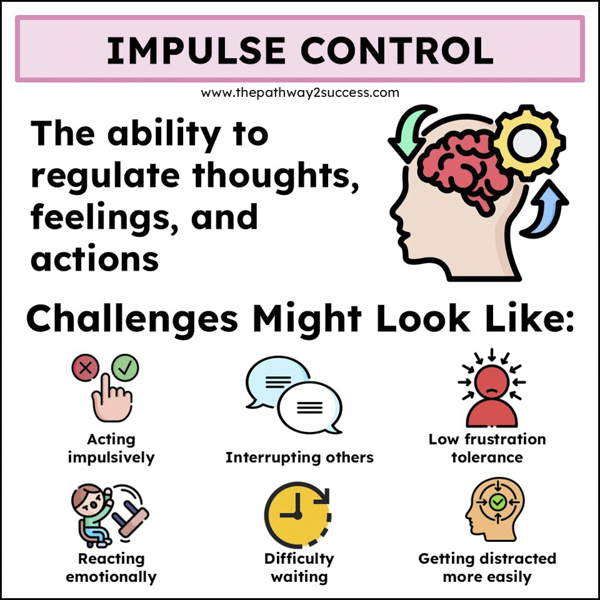
Impulse control refers to the ability to regulate your thoughts and urges. It’s the skill we use to stop, think, and act with a responsible choice. In the classroom, a student uses impulse control by raising their hand during a class lesson instead of shouting out. In a social situation with friends, a teen might use impulse control by keeping an unkind thought to themself instead of saying something that would hurt someone’s feelings.
How Challenges with Impulse Control Impact Behavior
Challenges with impulse control can cause behaviors to go unchecked. When learners struggle with self-control, they often lack the ability to “put the brakes on.” This might look like:
- Acting without considering the consequences
- Interrupting others
- Blurting out answers or comments in class
- Speaking without a social filter, sometimes saying unkind things
- Difficulty waiting their turn
- Reacting emotionally instead of responding thoughtfully
Strategies to Boost Impulse Control
Just like any skill, impulse control is an ability we can strengthen over time with practice. Give some of these techniques a try:
- Practice how to “stop, think, act, and reflect“
- Read and discuss self-control “what would you do?” scenarios
- Practice calming strategies like deep breathing, stretching, and visualization
- Model self-control with think alouds
- Give wait time before responding to questions
- Practice mindfulness
- Teach and practice self-monitoring strategies
- Practice journal writing
- Practice self-reflection to learn and grow from choices
Attention
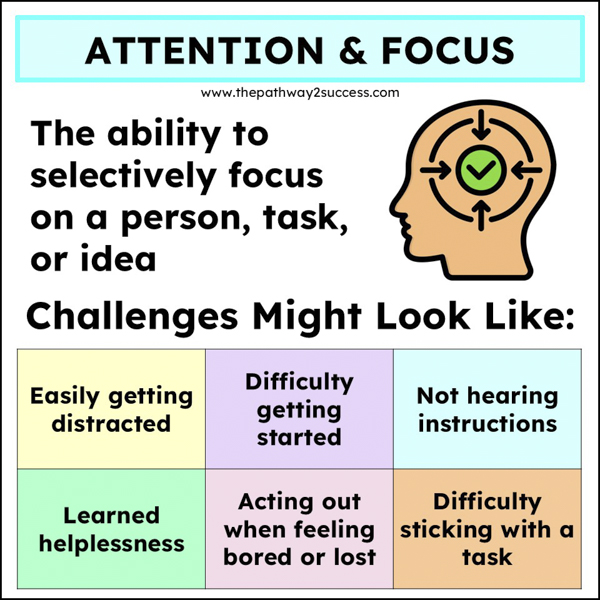
Attention is our ability to selectively focus on a person or task. This involves managing distractions, sustaining concentration, managing emotions, and re-focusing as needed. Strong attention skills lead to behaviors that help us learn new ideas, connect with others, and achieve our goals.
How Attention Challenges Impact Behavior
Difficulties with attention are directly related to behavior challenges. When kids and teens struggle with attention, it can impact everything from learning and work completion to following directions and maintaining friendships. At the same time, not being able to focus well can lead to tough emotions like feeling frustrated or upset. These attention challenges may look like:
- Difficulty focusing on tasks, activities, or responsibilities
- Difficulty listening to and/or following instructions
- Easily getting distracted or off-task
- Missing important instructions or information
- Acting out due to feeling bored, lost, or confused
- Learned helplessness (“I can’t focus, so why bother?”)
- Making careless mistakes due to limited focus and attention
- Feeling frustrated or irritable due to inability to focus on a task
Attention-Boosting Strategies and Supports
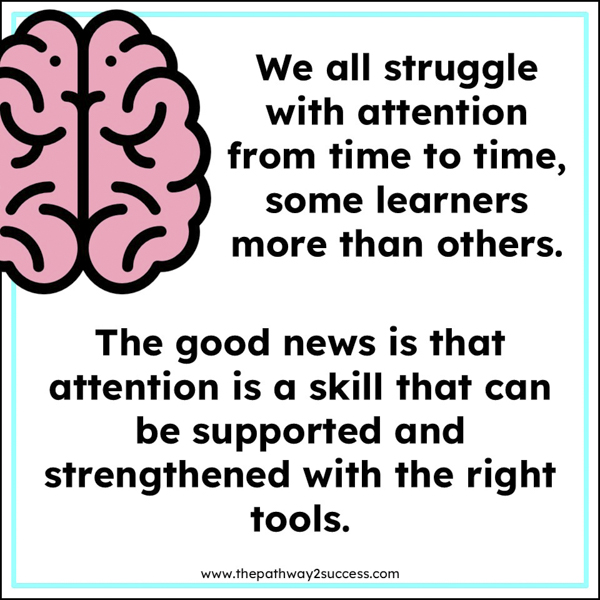
We all struggle with attention from time to time, some more than others. The good news is that attention is a skill that can be supported and nurtured with daily practices. Give some of these attention-boosting strategies a try:
- Teach strategies for actively staying focused, like asking questions or taking notes
- Integrate movement and exercise into the day
- Practice mindfulness activities like mindful coloring and mindful breathing
- Encourage healthy sleep habits
- Discuss attention scenarios
- Spend time outside in nature
- Take brain-boosting breaks between tasks and activities
- Integrate interests into learning activities
- Try a focus journal to boost attention over time
- Try individualized supports like fidgets, study carrels, or noise-canceling headphones
Organization
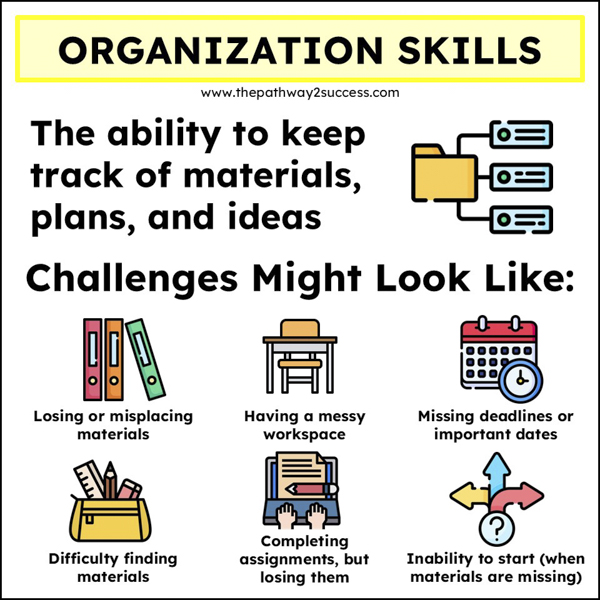
Organization is the ability to keep track of materials, plans, and ideas. When learners are organized, it makes it easier to find materials and get started on tasks. It also helps manage time and reduces overall stress levels.
How Organization Challenges Impact Behaviors
Challenges with organization can significantly impact behavior with academics, work completion, and everyday responsibilities. Organization challenges might look like:
- Having trouble keeping a neat work space, locker, backpack, or binders
- Difficulty finding the materials needed
- Losing or misplacing materials
- Missing deadlines or important events
- Making mistakes on assignments
- Feeling stressed or anxious due to disorganization
Building Organization Skills
To support organization skills, use some of these supports and strategies:
- Teach and practice how to stay organized in various settings
- Schedule daily and weekly organization time
- Create a daily routine or schedule
- Run an “organization boot camp” to teach skills directly
- Practice putting materials back right away
- Use planners, calendars, and other organization tools
Mental Flexibility
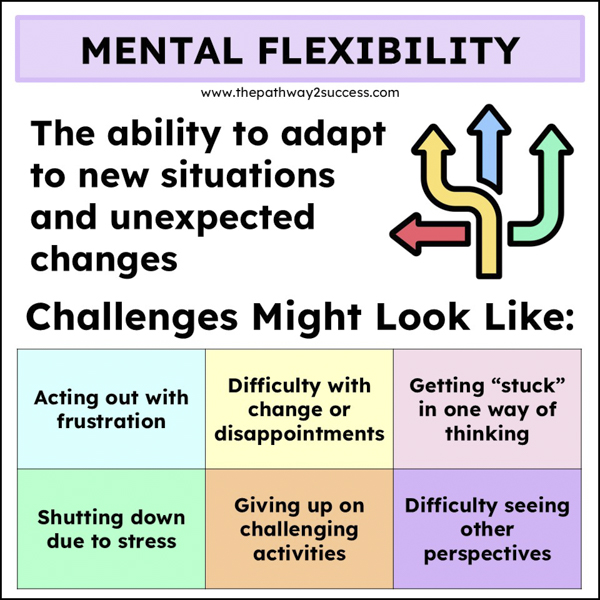
Mental flexibility is the skill that allows us to adapt to different situations and unexpected changes. We sometimes think of this is being able to “go with the flow.” A student might use mental flexibility to successfully cope with the disappointment of missing their favorite class due to a school-wide assembly. In another situation, someone shows mental flexibility by trying multiple solutions to a problem when they can’t figure it out right away.
How Mental Flexibility Impacts Behavior
When kids and teens struggle with mental flexibility, their thinking can become rigid. Instead of coping with stressors and changes in healthy ways, we can see a number of behaviors instead:
- Acting out with frustration when things don’t go as planned
- Giving up on tasks, assignments, or projects when something doesn’t go right
- Difficulty dealing with setbacks or disappointments
- Shutting down due to stress and tough emotions
- Getting “stuck” in their way of thinking
- Inability to perspective-take and see a situation in another way
- Getting into arguments with others due to inability to perspective-taking
Strengthening Mental Flexibility Skills
Since things in life don’t always go perfectly, we could all use a boost with mental flexibility skills. With that said, some need extra support more than others. Here are some ideas to try:
- Read and discuss “what would you do?” scenarios to practice flexibility
- Teach and practice healthy coping strategies to manage stress
- Practice mindfulness and other relaxation techniques
- Practice reframing challenges as opportunities to grow
- Teach problem-solving strategies
- Practice perspective-taking skills
- Prepare for changes in the schedule when possible
- Teach and practice conflict resolution strategies
Working Memory
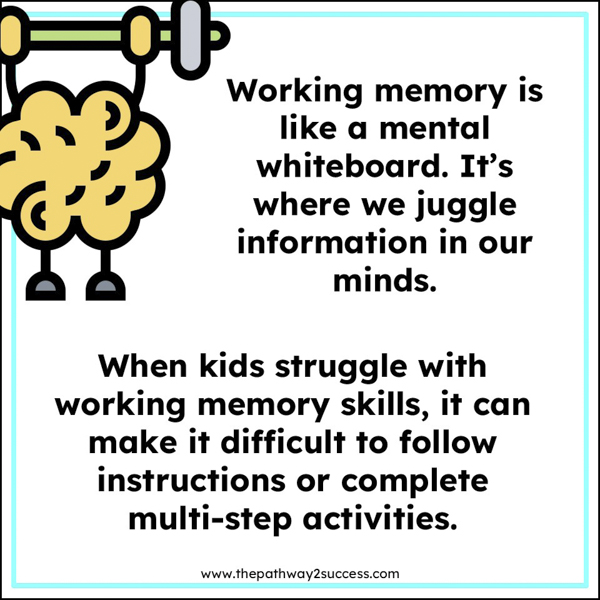
Working memory is the cognitive ability we use to hold information in our minds while we’re using it. You can think of it like a mental whiteboard – we use it to solve math problems in our heads and follow multi-step directions to complete a task. When our working memory skills are strong, it helps us complete tasks more smoothly.
How Working Memory Challenges Impact Behavior
When someone struggles with working memory abilities, it can make completing tasks more difficult. In turn, this can bring about a number of challenges. Some examples include:
- Difficulty following tasks or activities with multiple steps
- Not starting assignments or tasks due to not knowing how to get started
- Difficulty staying focused with too much information given at once
- Not being able to keep up
- Acting out in frustration when feeling like can’t keep up
Strategies for Working Memory
Working memory skills are important for kids, teens, and adults alike. Give some of the strategies for building working memory a try:
- Teach about working memory and discuss why it matters
- Use a planner or calendar to keep track of assignments and responsibilities
- Practice mindfulness
- Break tasks into smaller and more manageable pieces
- Use mnemonics and acronyms to remember important information
- Take breaks during working sessions
- Write notes (instead of trying to remember everything)
- Use visual aids to organize information
Perseverance
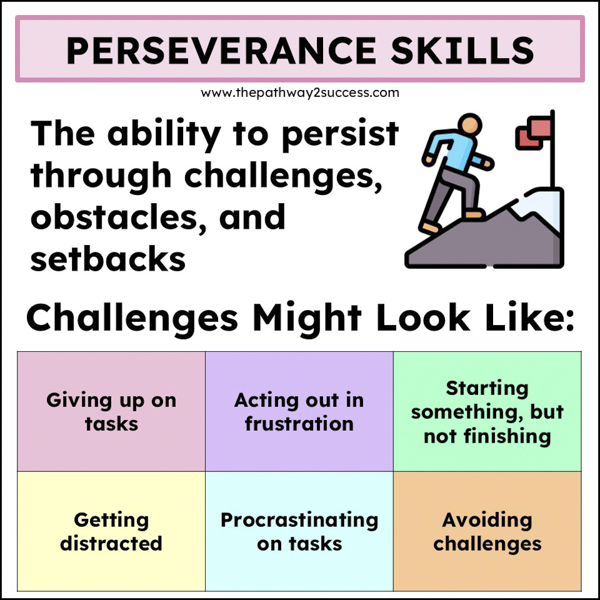
Perseverance is the ability to persist through challenges, obstacles, and setbacks. It’s the skill that helps us keep going even when things get tough. For example, a student shows perseverance when they keep working on a math test, even when it’s challenging. We come back to use this skill often in many different areas of our lives.
How Difficulty with Perseverance Skills Can Affect Behavior
When a child or teen struggles with perseverance, it makes it incredibly challenging to complete tasks and meet goals. It goes without saying that this can cause of number of behavioral difficulties. Here are some things we might see:
- Giving up on tasks or assignments, especially ones that are considered challenging
- Starting a project or task but not being able to finish
- Learned helplessness (“I can’t do this, so I won’t even try”)
- Acting out in frustration due to inability to complete tasks
- Procrastinating on important tasks and responsibilities
- Getting distracted with anything else besides the task at hand
Strategies to Boost Perseverance Skills
Kids and teens have the propensity to build their perseverance skills, but this certainly takes time, effort, and strategies. Here are some supports and activities to consider:
- Practice setting SMART goals together, reviewing them frequently
- Start completing small tasks first to give momentum
- Practice positive self-talk to provide encouragement (“This is tough, but I can do this.”)
- Practice mindfulness to enhance self-awareness and focus
- Build healthy habits like getting organized and starting tasks right away
- Take breaks to help stay focused over longer periods of time
- Review progress and feel proud of small wins along the way
Building Executive Functioning Skills
Building executive functioning skills with kids and teens is worth the investment. Ultimately, these strategies help provide kids and teens with a foundation for success. If you are looking for concrete ways to boost executive functioning skills with your learners, here are a few lessons and activities to try:
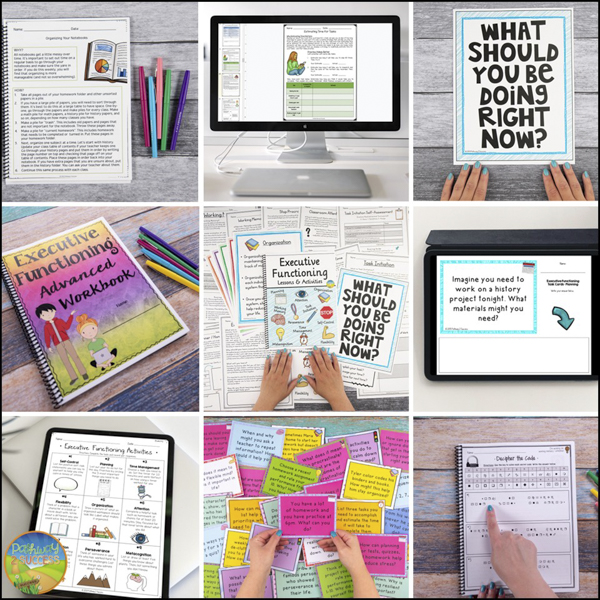
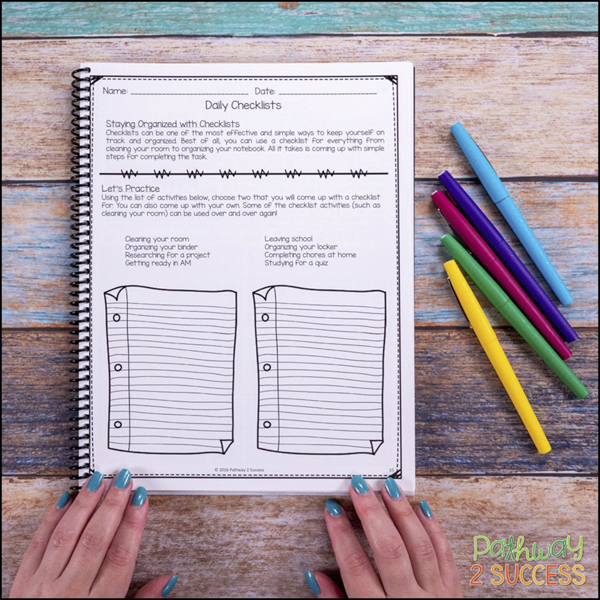
Executive Functioning Workbook
A complete set of no-prep activities focused on skills like planning, organization, time management, task initiation, and more.
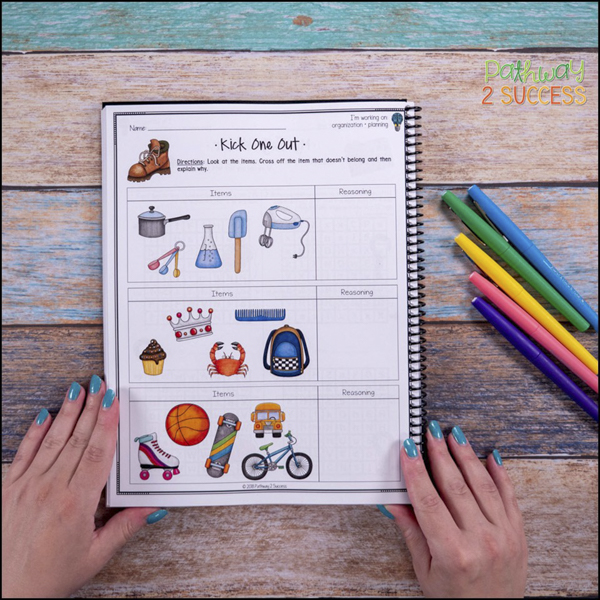
Executive Functioning Brain Games
Fun and engaging practice with executive functioning skills using games like brainteasers and puzzles.
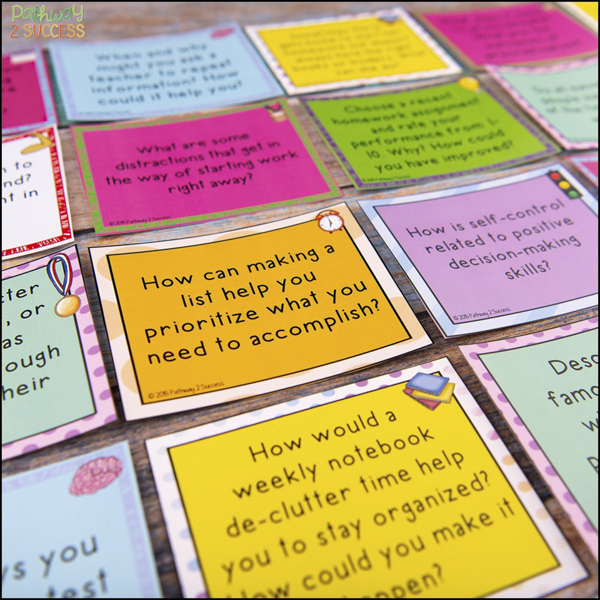
Executive Functioning Chats
Discussion starters to get kids talking about executive functioning skills in their own lives.
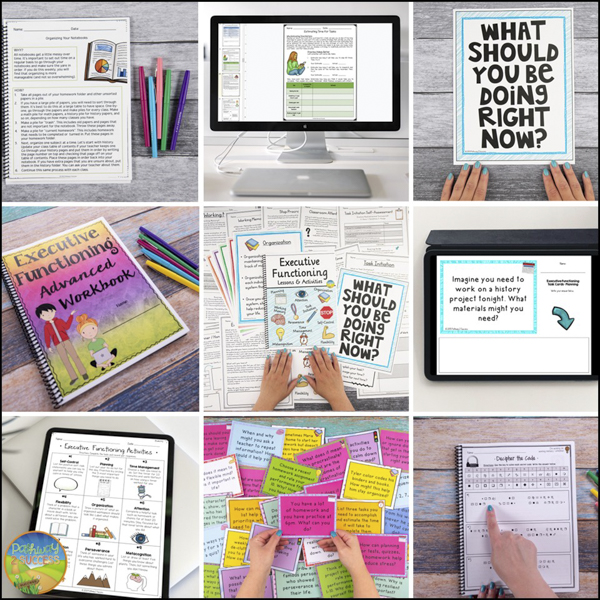
Executive Functioning Lessons for the Year
Get all of the activities above (and more) with a full set of executive functioning lessons for the entire year. This is the perfect way to introduce executive functioning, practice strategies, and build skills together.




Leave a Reply