Gratitude is feeling thankful and appreciative for what we have. You might feel grateful for the small things, like the comfort of a warm jacket on a chilly fall morning. You can also feel grateful for the bigger things in life, like your family and friends. Simply put, practicing gratitude makes us feel good.
With that said, practicing gratitude isn’t just a feeling. It’s a skill that can be cultivated and strengthened, and it’s worth taking the time to learn it with kids and teens.
Why Teach Gratitude in the Classroom?
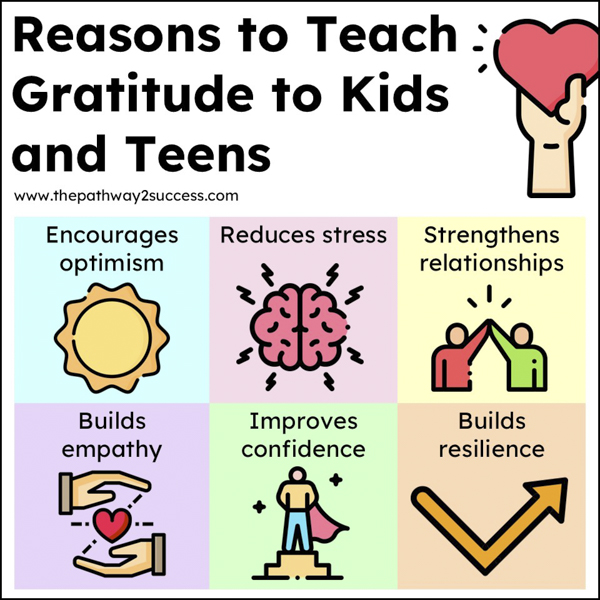
There are real brain-based reasons and benefits for practicing gratitude with your students – and the gratitude research supports this. Let’s consider a few (and feel free to share these directly with your students!).
- Improves Mood – Taking a moment to think about the positives in our lives actually changes our brain wiring. Noticing the good in our lives naturally helps us see more everyday good things. This helps lead to improved mood and happiness.
- Encourages Optimism – When practiced on a regular basis, gratitude allows us to become happier and more optimistic, even when faced with challenges along the way.
- Reduces Stress – Learning to see the positive things around us is a fantastic way to combat daily stressors. Stress, problems, and difficulties will still be there, but gratitude helps balance those challenges out. Yes, you might have a high-stakes test to study for, but you’ve also got a few really good friends who can make you laugh during study sessions.
- Builds Resilience – Failures and let-downs can feel incredibly disappointing in the moment. While we can’t entirely avoid these moments, gratitude certainly makes them pass easier. You might feel upset after losing an important game, but you also remember that your family is there to build you up after the loss.
- Strengthens Connections – Sometimes it’s easy to feel disconnected in our digital world. Gratitude brings us back to remembering the strong connections and relationships in our lives. Whether it’s a classmate who says good morning to you or a coach who encourages you to work harder, you know you have people who make your world a better place.
- Builds Empathy – By practicing gratitude, we can learn to be more understanding towards others and ourselves. This can help us get along with others and navigate disagreements in healthier ways.
- Improves Confidence – It’s important to be grateful for yourself, too! Gratitude helps us notice all the amazing things about ourselves.
Just a note that it’s easy to think of practicing gratitude as something we focus on during November. Yes, it’s absolutely true that Thanksgiving time is a meaningful time to make gratitude your focus, but it’s also worth mentioning that being thankful is an incredibly powerful skill any time of year. You don’t need to wait for the “perfect time” to introduce or practice gratitude in your classroom. Any time is a great time to notice the positive things around us. In today’s fast-paced world, we could all use a little more of that.
Simple Gratitude Activities to Try
Creating a gratitude practice in the classroom is something easy that every educator can do. Here are some simple and meaningful gratitude activities to try.
Daily Gratitude List
What it is: A simple bulleted list of what you are thankful for that day.
How to give it a try: In a dedicated gratitude notebook, have students jot down three specific things they are grateful for that day. The key here is being specific and aim to change up the items on your list from day to day. Some examples of things to be grateful for include:
- The warm feeling on sunshine on a beautiful fall day
- My friend Sarah’s laugh after I tell a funny joke
- A new pair of comfortable running shoes
- Art class where I get to be creative and have fun during the day
- The feeling when I finally understood the math lesson today
- A hug from my grandma after a stressful day
When students are just starting, it may be challenging to think of three things they’re grateful for. That’s okay! Encourage students to do their bests and try to come up with something. Remind students that practicing gratitude is a skill. Just like building our reading or math skills, learning to change our mindset takes time and practice.
Once your students have the idea down, create time for a daily routine. This can be in the morning, at the end of the day, or a quick break between activities – whatever works for your classroom. If you have time (and if students are comfortable), give time to share your gratitude lists. This can be a really fun way to learn about each other, build relationships, and cultivate empathy.

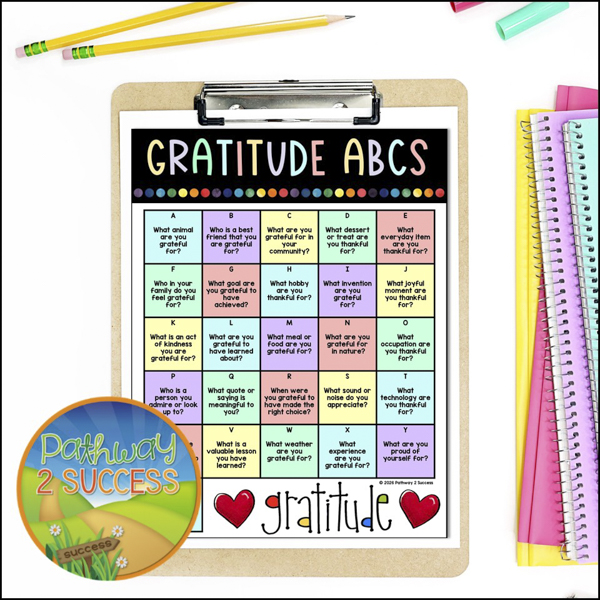
Gratitude ABCs
What it is: A different gratitude focus for every letter of the alphabet.
How to try: Use each letter of the alphabet to target something to be grateful for. For example, A might be focused on animals you’re grateful for, while B highlights a best friend you appreciate. Using each letter of the alphabet gives you 26 days each with a different gratitude focus. You can choose to have students chat, draw, or write about their response to each.
Bonus: Print the free Gratitude ABC worksheet where I’ve set up all the gratitude prompts for you!
Gratitude Journal Writing
What it is: Dedicated journal writing time with a focus on what we’re grateful for.
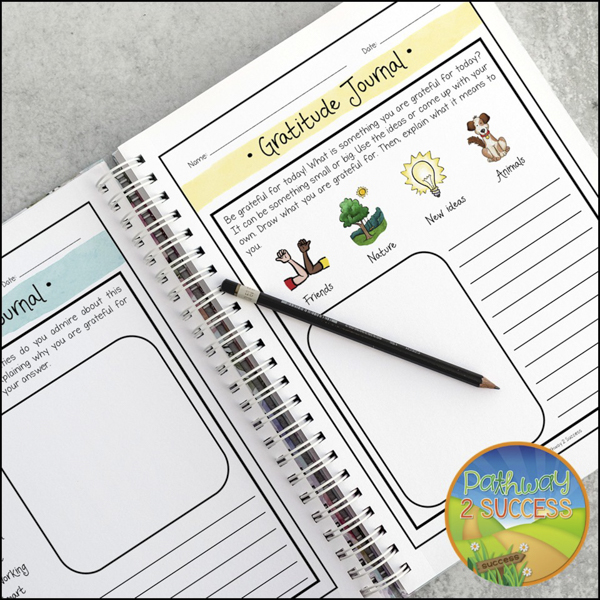
How to start: Start by providing students with their own individual gratitude journal. They even decorate the front cover to make it their own. Then, add at least 10 minutes of gratitude journal writing time into your day. This is a great option for a “do now” as kids walk into the room. You can choose to start with simple prompts, or make them more in depth. It’s truly up to you and what works for your learners. Here are a few sample gratitude prompts to try right away:
- Be grateful for today! What is something you are grateful for today? It can be something small or big. Draw what you are grateful for. Then, explain what it means to you.
- Think of a great friend. What qualities do you admire about this friend? Share your gratitude by explaining why you are grateful for this person.
- Be grateful for great inventions! What is one of the best inventions? Use the examples of come up with your own. Draw and explain why you are grateful for that invention. Examples: computer, electricity, car, robots, bicycle.
Make up your own daily journal or check out this complete gratitude journal filled with prompts and activities for learners.
Gratitude Chats
What it is: Short, meaningful discussions about what we’re grateful for.
How to try: Get together for a class conversation centered around what we’re feeling grateful for. You can start with simple questions like:
- What do you feel grateful for today?
- What put a smile on your face today?
- What everyday item can you take time to appreciate today?
- Who is someone you feel extra thankful for this week?
Consider posting a gratitude question of the day as a “do now” or morning meeting activity.
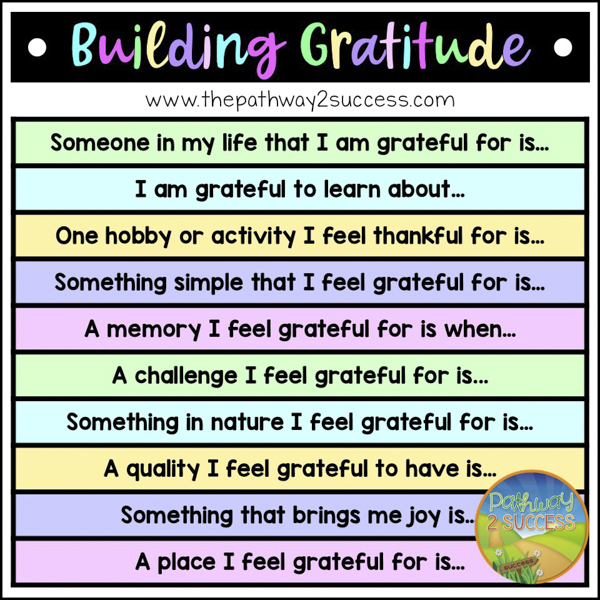
Another really simple strategy is to use sentence starters. It helps learners to think more creatively about what they feel thankful for. Use these examples or check out the free printable list of gratitude sentence starters.
- Someone in my life I am grateful for is…
- Something that brings me joy is…
- A place I feel grateful for is…
- Something in nature I feel grateful for is…
Gratitude Art
What it is: Integrating art with the practice of gratitude.
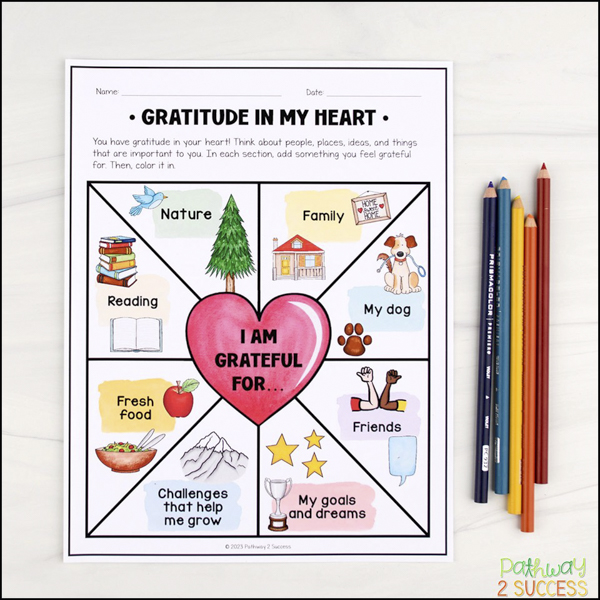
How to give it a try: Start by generating a collective list of things you are grateful for. This list can be huge. You might feel grateful for nature, friends, family, art, comfortable shoes, good movies, the beach, hobbies, sunshine, great music, and fresh air. Anything goes! Have students choose 4-8 for themselves to draw and color. When students are finished, you can give them time to share. This becomes a healthy time for relationship-building and learning about each other as individuals.
A bonus is that you can extend this activity by allowing students to choose one thing to write about more in depth.
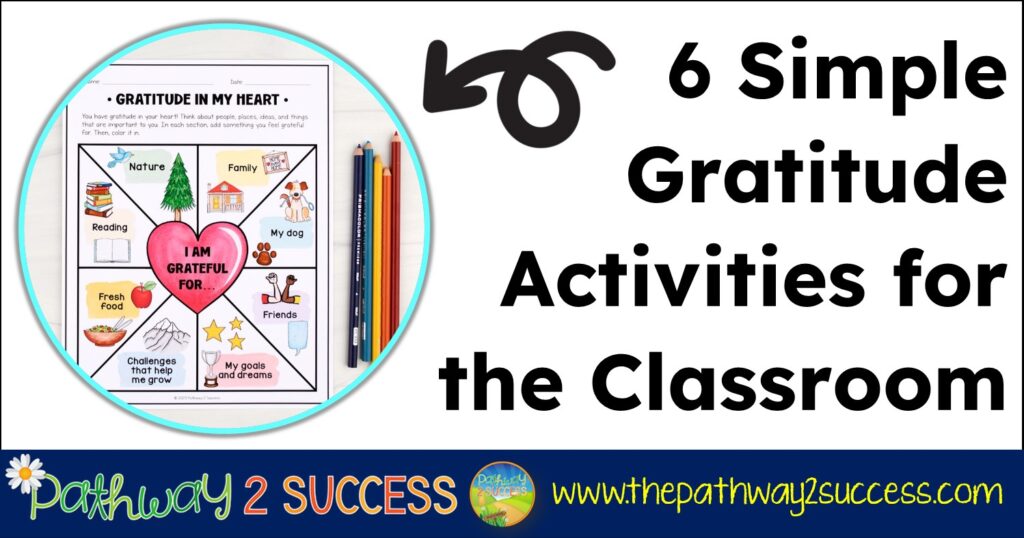
If you need a simple place to start, I’ve put together a complete Gratitude in My Heart lesson and activity you can check out here.
Gratitude A-Z Challenge
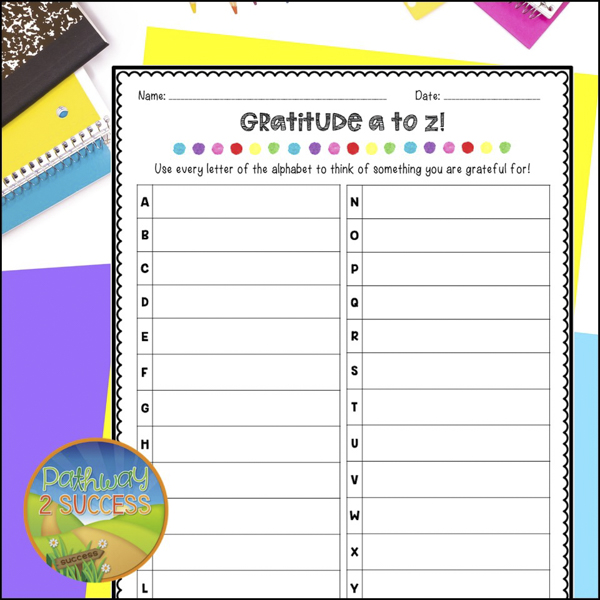
What it is: A challenge to identify something we’re grateful for starting with each letter of the alphabet.
How to give it a try: Grab this free gratitude printable. Have students work with a partner or a small group to come up with something they’re grateful for from A to Z. It’s a really fun and easy way to notice that there’s so much out there to be thankful for.
Final Gratitude Tips
- Have fun! Practicing gratitude should be an enjoyable experience. Embrace the feeling of being thankful for what we have around us.
- Be consistent. Research shows that the benefits of practicing gratitude are best when we practice on a regular basis. Consider making daily gratitude an everyday activity in your classroom. Remember that new habits take time to develop.
- Encourage sharing gratitude with others. If a student expresses their gratitude in a family member, friend, coach, or someone else, encourage them to let that person know! Expressing our gratitude is a great way to give back.
- Need more activities? I’ve made a list with 30 gratitude activities for kids and teens. Check them out and choose your favorites!




Leave a Reply