
Being able to focus effectively plays an important role in the classroom – both for students and for teachers. It’s the ability learners use to listen attentively to a lesson, write a multi-paragraph essay, or stay focused as they read a chapter in a book. When students concentrate well, it makes a difference; it helps them to comprehend material more deeply, develop stronger critical thinking, and complete tasks at their best.
Going one step further, being able to focus more effectively also helps learners feel more confident – this alone is incredibly important.
From a teacher’s perspective, when kids and teens have the skills to focus well, it truly helps the entire flow of the classroom. Stronger attention skills open the doorway to more understanding instructions, following through with multi-step assignments, working well with others on a task, and ultimately achieving goals.
It’s also worth mentioning that attention isn’t purely an academic skill; students also use this ability in connecting with others, whether that’s having a conversation with a friend or talking out a problem with a teammate.
Simply put, attention skills matter.
Signs of Focus Challenges
Sometimes difficulty with attention might look like zoning out or getting distracted. Other times, these challenges can sometimes manifest in different, even sneaky ways. For instance, a student might appear to be refusing to start an assignment when they’re actually just struggling to get focused and started independently.
It’s important to remember that attention challenges aren’t about being lazy, unmotivated, or defiant. Instead, these difficulties are often rooted in lack of skills, strategies, or healthy habits. The most important thing is that techniques and supports can be learned over time.
Be on the lookout for some of these signs of a focus challenge for kids and teens:
- “Zoning Out” – Inattention might look like daydreaming or mind-wandering. This is typically what people think of when we say a student has attention challenges.
- Difficulty Starting – Sometimes, attention difficulties come out as an inability to get started on something. A student might sit down with all their materials, but seem unable to get going on the very first steps. They might doodle, talk to a neighbor, or play with something in their desk.
- “Refusing” to Start – When kids and teens really struggle with being able to focus and get started, it can look like they’re refusing. This is an incredibly important point to mention, because these learners aren’t lazy or unmotivated, but instead lack skills to get and stay focused.
- Procrastinating – Procrastination is putting off a task until later. When someone has a tough time getting or staying focused, it can feel daunting to even try getting started. In turn, they might just keep putting it off until the last possible minute. This can lead to rushing, careless mistakes, and missed deadlines.
- Task Switching – A person sometimes jumps from one task to another when they’re struggling with getting and staying focused. For instance, a student might start their morning work, but then pause that task to start organizing their pencil pouch. This task switching can go on and on with multiple activities.
- Lack of Follow-Through – Sometimes a focus challenge can look like a lack of follow-through. Imagine the student who starts a task with enthusiasm, but then runs out of steam and gives up, never completing the actual goal.
- Shutting Down – Sometimes the scope of a task feels overwhelming for kids who struggle with focusing. This can lead to difficulty managing emotions, acting out in frustration, or shutting down.
Building Focus Strategies & Skills
Focus skills aren’t set in stone. While it’s true that focusing is more challenging for some individual than others, it’s incredibly important to highlight that we can all benefit from focus skills, strategies, and supports.
Making the Environment Focus-Friendly
The first step is setting up the environment for success. Give some of these simple strategies a try in your classroom.
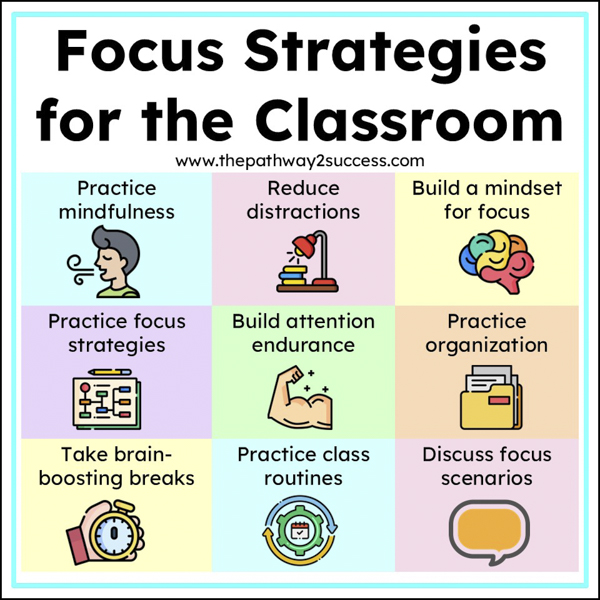
- Reduce Distractions and Clutter – Make a concerted effort to keep the classroom neat and free of distractions. For any educator in a busy classroom, it goes without saying that this is always a work in progress. It’s not about perfection, but making your space as focus-friendly as possible. Try keeping extra materials (like art supplies and games) out of sight in cabinets and shelves. It may also help to take down unnecessary visuals or posters. Lastly, spend time each week re-organizing – your students can even help with this!
- Design Dedicated Work Zones – Clearly label and dedicate specific areas of the room for specific types of work. For example, you might have an independent reading nook, writing station, and creative art corner.
- Practice Routines – Predictable routines help reduce the cognitive load, making it easier to get started and stay focused on tasks. Design and practice routines to help your day-to-day classroom operations run smoothly.
- Strategic Seating – For students who struggle more with staying focused in class, consider seating them in specific locations that might help them. This is going to vary for every individual student. For instance, you might seat a student near the front board or away from the door.
Developing a Mindset for Focus
It’s vital to help students understand that focusing is a skill that really matters – And it’s something we can improve with strategies and supports over time. This is truly a mindset. Our focus abilities aren’t set in stone. We can strengthen them just like we strengthen a muscle. Start the discussion about attention and focus with kids and teens to help set the stage for success.
Here are some questions to discuss together:
- What does it mean to focus well?
- When are times it’s important to focus? Why is it important?
- What strategies help you get and stay focused on an important task?
- What challenges get in the way? How can you plan for those challenges?
- What are some things that could help you get and stay focused?
- You can build your focus abilities with strategies and tools. How do you think that might help you in your life?
- When was a time you focused well on something? What worked well for you?
- We all focus a little differently. What are some things that work well for you as an individual learner?
Practicing Focus Strategies
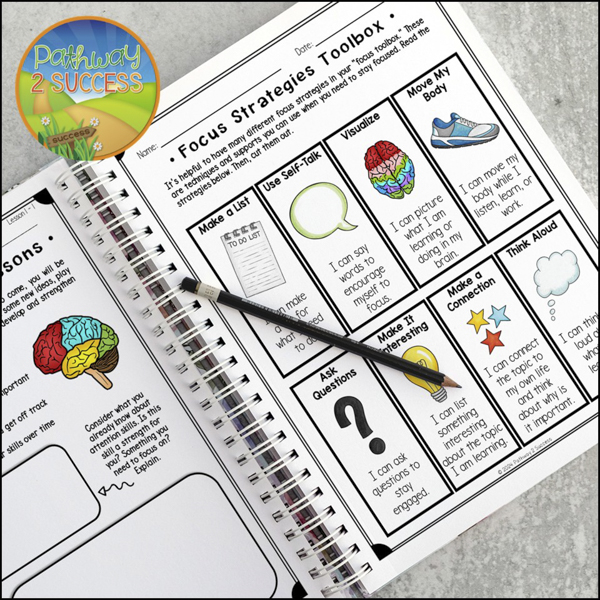
We all need strategies in our own individual “focus toolbox.” Different strategies work for different people (and even at different times), so it’s important to introduce and practice many different techniques. Discuss and practice some of the focus strategies together:
- Make a list – Before starting a task, write down a list of steps to get there. Students can use the list as a checklist as they go.
- Use self-talk – Recite positive phrases like “I am calm and focused today,” and “I can use strategies to do my best.”
- Focus on one thing at a time – Intentionally focus on just the task at hand, making a concerted effort to ignore distractions that pop up along the way.
- Move your body – Exercise and stretch before sitting down to focus on a task.
- Write it down – When learning something new, try writing notes down. This works well when listening to a lecture or watching a video.
- Ask questions – Engage the mind by encouraging asking questions about the topic.
- Make a connection – Practice finding a meaningful connection to the topics you are learning about.
- Visualize – Picture what you are learning about in your minds. You can practice this by discussing what you’re imagining or drawing a picture.
Practicing Mindfulness
An important evidence-based strategy for attention is mindfulness. Mindfulness is the practice of intentionally focusing on the present moment. Instead of worrying about stuff that happened in the past or might happen in the future, we are anchored to the “right now”. Even just short moments of mindfulness can promote calm, strengthen self-control, and improve focus.
- Mindful Breathing – Mindful breathing is the practice of intentionally focusing on your inhales and exhales as you breathe. Even just a few minutes of mindful breathing can help relax the body and mind, allowing for greater focus and concentration. Best of all, it’s a technique kids and teens can use anywhere and anytime.
- Mindfulness 5-4-3-2-1 – Mindfulness 5-4-3-2-1 is self-regulation technique to calm our bodies and focus our minds. It involves pausing and identifying 5 things you can see, 4 things you can feel, 3 things you can hear, 2 things you can smell, and 1 thing you can almost taste.
- Mindful Coloring – Mindful coloring is a favorite for kids and teens of all ages. Use these free attention and focus coloring pages to give it a try.
Encouraging Healthy Focus Habits
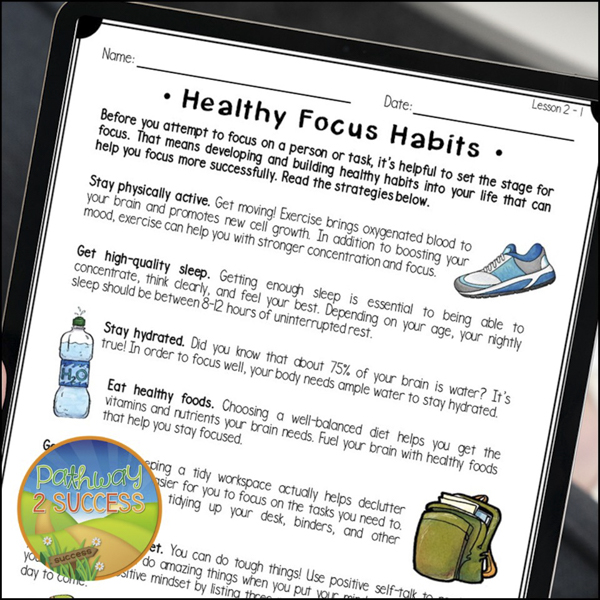
Healthy habits set the stage for focus. As an educator, many of these things aren’t under your control, but it’s still worth discussing and learning about them together.
- Stay physically active – Exercise plays an incredibly important role in keeping the brain and body running at peak performance. Simply put, exercising on a regular basis helps us focus and concentrate on challenging tasks. Discuss strategies for staying physically active like playing sports, walking a family pet, or doing some stretches before an important task.
- Get high-quality sleep – Getting the right amount of rest is paramount to being able to focus our best. Talk with kids and teens about how to set up a healthy nighttime routine for high-quality sleep.
- Stay hydrated – In order to focus well, we need to be hydrated. Encourage kids and teens to stay hydrated by keeping a water bottle at their desk or providing frequent breaks to the water fountain.
- Get organized – Having a tidy workspace makes it easier to complete focused work. Practice organization strategies like taking time tidy up work areas on a regular basis.
- Reduce technology time – It’s true that technology can be incredibly helpful to complete tasks at times, but it can also drain our focus energy. Help kids learn strategies for reducing their tech time throughout the day, like leaving your phone in another room when you have an important task to do.
Making Tasks Manageable
One of the biggest roadblocks to focusing our best is feeling overwhelmed. This is especially true with bigger tasks, projects, and assignments. Use some of the strategies below to make tasks more manageable for kids and teens in the classroom.
- Chunking – Sometimes big assignments can feel overwhelming, making it difficult for kids and teens to get focused on the task at hand. Chunking is breaking that bigger task apart into smaller ones. For instance, when writing an essay, try focusing on just one section at a time.
- Pomodoro Technique – Teach students how to work in bursts with the Pomodoro technique. This strategy involves working for short bursts of time and then taking a short break. For example, you might have students work on math word problems for 15 minutes, followed by a planned break. The most important part is that when the timer is going, you are only focusing on the goal. This provides some extra focus structure when completing important tasks.
- Start Small – For kids and teens really struggling to get and stay focused, try starting with shorter and smaller expectations. You might assign only odd numbers on a math worksheet or ask your learner to complete 1 essay instead of 3. This isn’t about being “too easy” on kids, but instead building confidence. Success often starts with baby steps in the right direction.
Incorporating Brain-Boosting Breaks
Breaks are incredibly important for strong focus and concentration. This fact is well documented in research. What’s important is that we practice using brain-boosting breaks. Instead of activities that drain our mental energy, like using technology, we can plan for healthy breaks like exercising, writing in a journal, or practicing mindfulness.
Read more about social-emotional breaks that work perfectly in the classroom.
Discussing Focus Scenarios
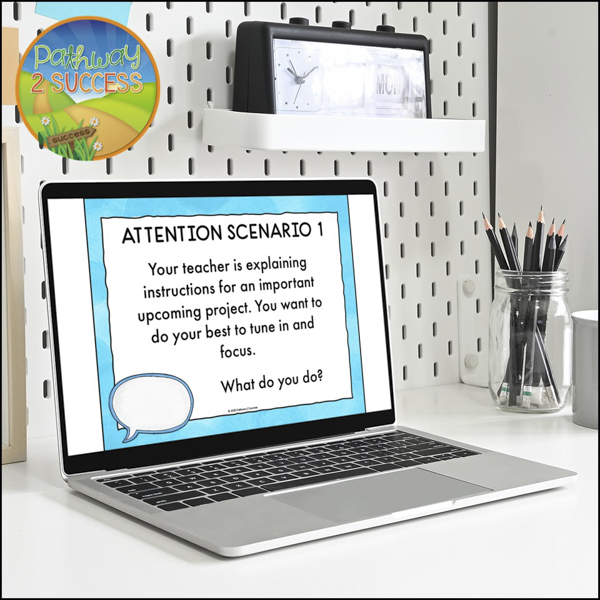
It’s helpful to teach focus strategies with real-life context. Use scenarios to encourage students to think about strategies they can use in the moment.
- You’re working hard on an assignment when a friend starts talking to you about a completely different subject. What do you do?
- You are trying to write a story in your journal, but you keep getting stuck. You aren’t sure why you can’t focus your best. What do you do?
- You are doing your best to complete a book report in the library, but you keep getting distracted when someone else is talking. What do you do?
Come up with your own scenarios to discuss or give yourself a start with these attention scenario discussion cards and slides.
Discussing Distractions
Whether it’s a friend chatting with us about their weekend or our phone going off, there will always be distractions in life. Instead of trying to eliminate all of these distractions entirely, it’s important to discuss strategies for managing these roadblocks along the way.
For instance, before starting a science lab, you might pause and ask your students: What are some distractions you might face during this activity? How can you manage those distractions?
Building Attention Endurance
The idea of attention endurance is practicing how to focus over longer periods of time. Choose an activity and encourage learners to use their strategies as they focus for a certain amount of time. Some activities to try include reading, writing in a journal, organizing materials, studying, or having a conversation with a friend. Come up with your own focus-boosting activities together too.
Encouraging Focus Activities Outside the Classroom
Of course, the classroom isn’t the only place kids and teens should be practicing their focus skills. In fact, one of the best ways to boost attention over time is to practice focusing on activities we love. For kids and teens, this might be playing guitar, coloring, building something, or learning a new language. Discuss these activities together as a group. On a Friday before the weekend, you might ask:
- What activity can you use to build your focus muscle this weekend?
- What is something you plan to focus on for at least 15 minutes at a time?
- What strategies can you use to stay focused on that activity?
- What are some distractions that might get in the way? How can you manage them?
Takeaways for a Focused Classroom
Building a more focused classroom takes time and effort, but it’s well worth the investment. Possibly the most important takeaway is to remember that attention is a skill we’re all building. With the right strategies, tools, and supports, we can help kids and teens build their focus muscles – something they can take with them in many different areas of their lives.
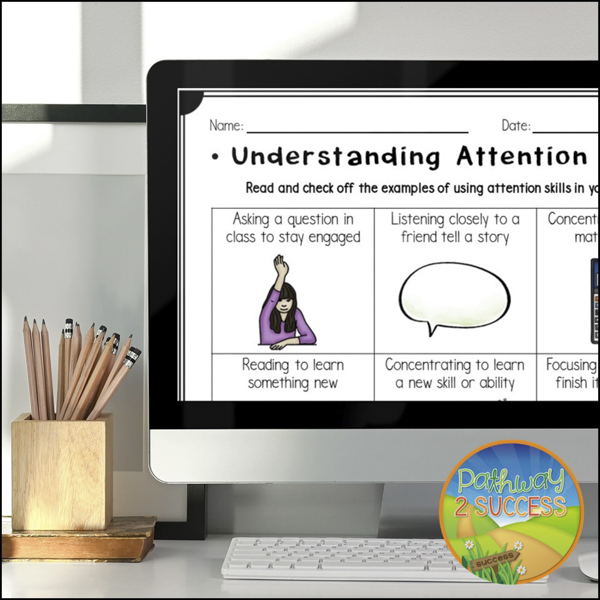
Ready for the next step? Teach attention skills explicitly with attention lessons and activities for kids and teens in your classroom.




Leave a Reply