Executive functioning strategies are the tools and techniques that help us begin challenging tasks, work through problems, and achieve our goals. These strategies are important for everyone no matter the age, but especially kids and young adults with growing brains. Ultimately, the right executive functioning strategies teach kids and teens how to work smarter (and instead of just working harder).
It’s important to mention that executive functioning strategies aren’t always a one-size-fits-all approach. Different techniques might look different from person to person, and that’s okay. For instance, one student’s organizational system might be having different folders for each class, while another student does better with one centralized binder. Similarly, someone might do best with a printed planner that they write in each day, while another person prefers to use an app on their phone because it gives them reminders. What’s most important is finding the right executive functioning strategies to help each individual face the challenges ahead.
Here are 15 executive functioning strategies every learner should know:
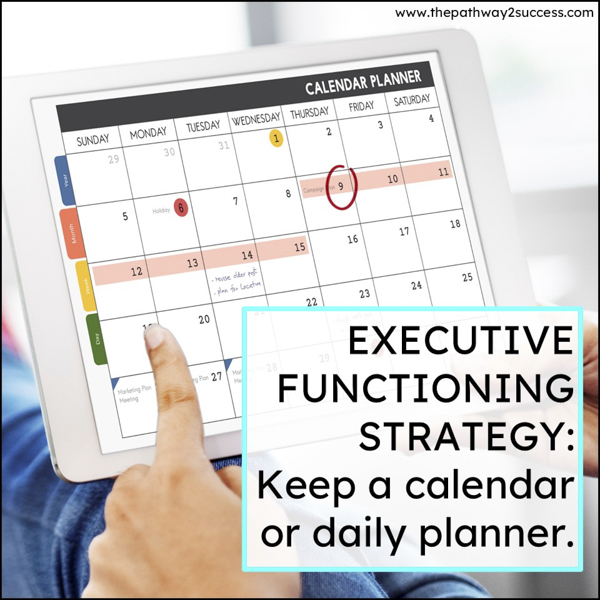
Use a Calendar or Planner
A calendar or planner is an essential tool to help learners stay organized, manage time well, and meet deadlines. By writing down the important tasks and events we have going on, we can actually free up mental space to focus on other activities that matter. Start by choosing the calendar or planner that works best for you. Some prefer a printed planner while others might benefit from a digital one. Here are some important tips:
- Fill your calendar or planner with important tasks. Examples might include having basketball practice on Thursday night, a unit 3 math test on Friday, and a friend’s birthday on Saturday.
- Be specific. Instead of writing in that you have reading homework tonight, you might list that you need to read chapter 2 of your novel and write a paragraph to summarize it. Ultimately, this extra step helps ensure that you’ll get the task done right.
- Review your planner or calendar regularly. Make it a routine to check your planner or calendar every day. This can help make sure that you stay on track and don’t miss important tasks.
Review and Reflect
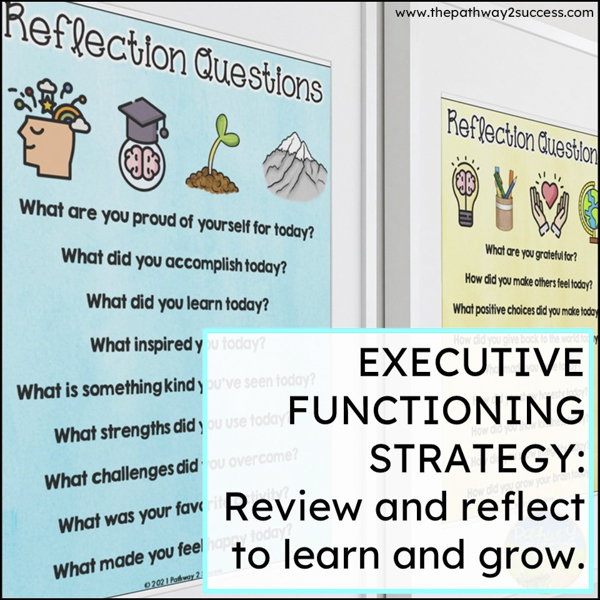
Taking time to review and reflect is incredibly important for learning in general. It’s what helps us identify what went well, which strategies were most helpful, what didn’t go so well, and what we could do better in the future. Here are some simple strategies to review and reflect throughout the day:
- During tasks and assignments, pause and check in with yourself from time to time. Use this opportunity to notice how you’re doing and what else you might need to be successful.
- After completing a task, ask yourself questions – What went well? What strategies did I use? What didn’t go well? What can I learn from this?
- Use end of the day reflection questions to make reflection part of your everyday routine.
Break Down Tasks Into Smaller Ones
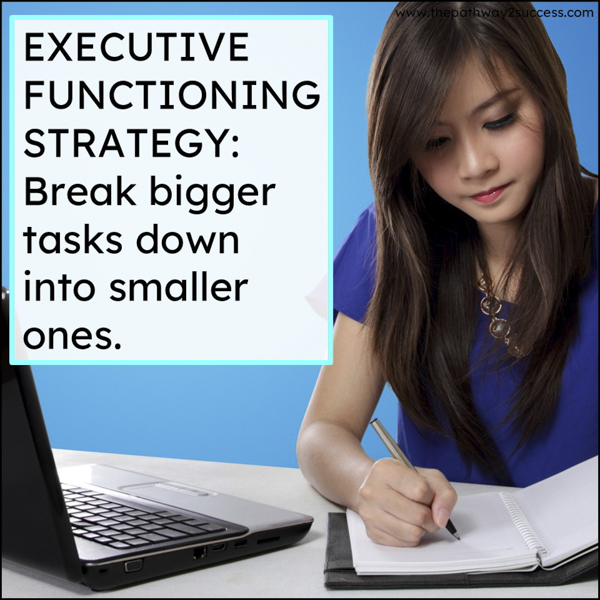
Big projects can feel overwhelming. For many learners, this can make these tasks more difficult to start, leading to procrastination and avoidance. One simple strategy worth using is breaking the task down into smaller pieces. This works for all sorts of tasks like long-term research projects, daily chores, and even nightly homework assignments. By breaking the project or task apart, we can learn to focus on just one thing at a time. This makes activities considerably more manageable, freeing up cognitive space to get focus and begin.
To give this a try, take your next project or assignment and list out at least 4 steps it will take to finish it. For instance, if you are working on writing a science report, you might include: research sources, write an outline, write the paper, and revise the paper. Of course, this strategy is versatile; we can learn to break down tasks in any way that makes the most sense in the moment.
Write To-Do Lists
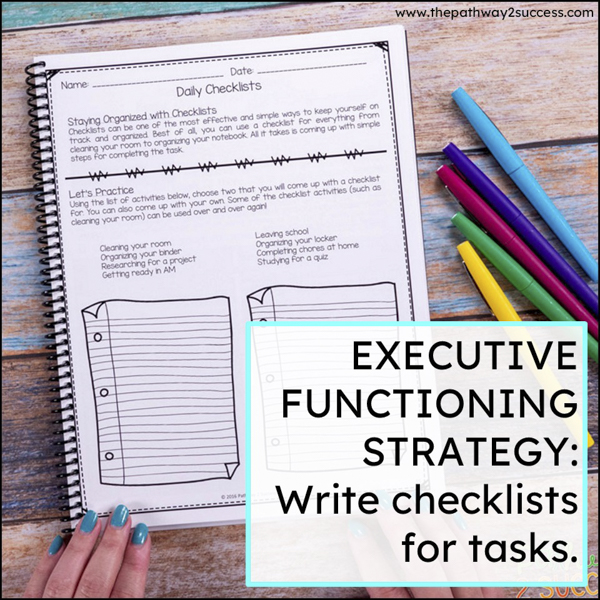
Writing to-do lists can help learners plan and prioritize before starting a task. It can also improve focused work time, as they can use the to-do list to check off each step as they go.
You can give this a try by writing out all the tasks you need to do on a single page. Consider: Which tasks are most important? Which are due first? Which can you finish quickly and check off right away? Use these questions to help you prioritize the items on your list.
Start One Small Step
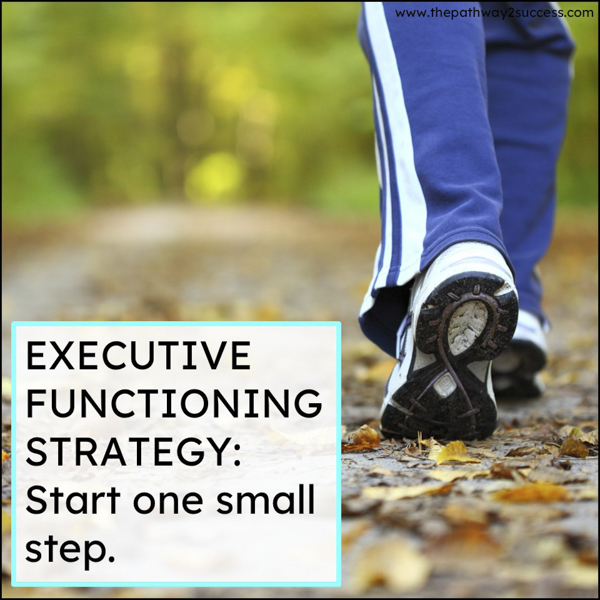
Getting started on big tasks and projects can sometimes be challenging. Instead of focusing on the whole project, try starting one step at a time. By starting with just one small step, we can build momentum and make progress towards our goals. To give this technique a try, pause and think about a task you need to do. This can be anything from writing a research paper to cleaning your room. Then, pick one small step to commit to. Keep that step small and simple. Take immediate action and notice how you feel. Often times, starting just that one step can help you feel motivated to keep going.
Practice Mindfulness Regularly
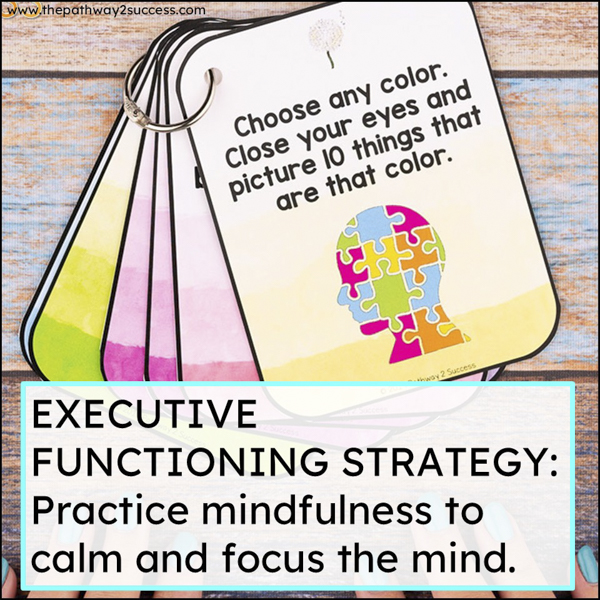
Mindfulness is the practice of focusing on the present moment. Sometimes, we think of mindfulness as simply a relaxation strategy, but it’s so much more. In fact, lots of research shows that a regular mindfulness practice significantly enhances our executive functioning skills. Mindfulness has the power to improve attention and focus, strengthen working memory skills, reduce emotional reactivity, and build self-regulation skills.
With all of that said, mindfulness is truly a practice; instead of practicing mindfulness randomly, it works best when we set aside daily time for mindfulness in our everyday lives. Here are some simple, fun, and engaging ways to add mindfulness into your daily routine:
- Practice mindful breathing – Take 5-10 minutes each day to practice mindful breathing. Start by sitting comfortably and focusing on your breath as you inhale and exhale. You can also add mindful breathing exercises like “4-7-8 Breathing” or “Cool Off the Pizza.”
- Try mindful coloring – Grab a coloring page and some coloring utensils (colored pencils are a favorite). Set the timer for 10 minutes and slowly breathe in and out as you color.
- Practice mindfulness meditation – Sit in a comfortable position and close your eyes. Slowly breathe in and out. Notice the sensations in your body as you breathe. Let your body and mind relax. You can also try other mindfulness exercises to keep it interesting.
- Use guided meditation apps – Digital apps like Calm and Headspace can help guide your mindfulness practice.
- Take a mindful walk – Take a walk outside. Engage your senses by noticing what you see, hear, feel, and smell around you.
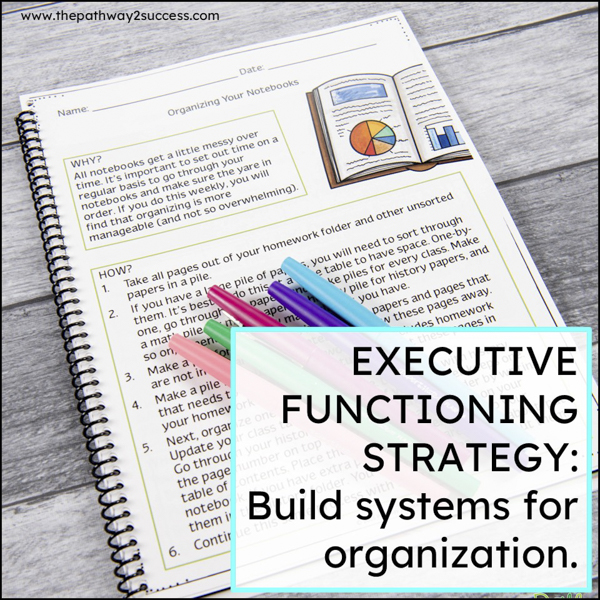
Keep Systems for Organization
Staying organized is key for getting started on tasks, staying focused, and working efficiently. But strong organization doesn’t happen by chance; it’s built with carefully planned systems for organization. Pause and reflect about the organization systems you use in your life. What’s working for you? What isn’t? Consider some of the tried-and-true organizational systems below:
- Using a planner or calendar to keep track of important events and assignments
- Setting up a dedicated workspace for assignments
- Making it a habit to put materials back as soon as you are done using them (example: putting craft materials back after working on an art project)
- Creating a system to manage classroom materials, such as separate binders or folders for each course or class
- Using a color-coded system to keep important materials together (example: math materials are red)
- Making a routine to re-organize materials once a week
Take Breaks
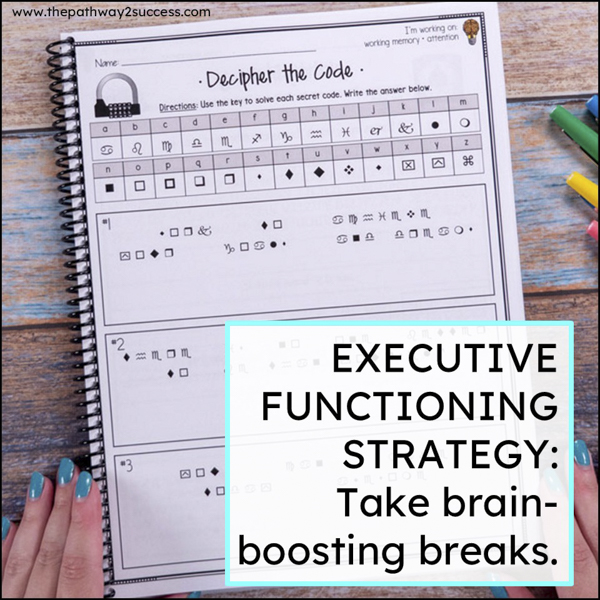
Our brains are not designed to be on the go constantly. Plenty of research has shown that we actually need brain-boosting breaks to do our best work. Even just a short break can help renew skills for concentration, self-regulation, and problem-solving. Try scheduling regular breaks into longer working sessions. You can set a timer to remind you to pause and stretch. At the same time, it helps to notice when your focus is starting to fade. This is a key indicator that you might need to step away with a brain-boosting break, helping you come back fresh later on.
Instead of activities that drain our brains (like scrolling on social media, for example), aim for break activities that replenish thinking abilities. Here are just a few to try:
- Exercise or stretch
- Practice mindfulness and mindful breathing
- Write in a journal
- Listen to music
- Spend time in nature
- Color or draw
- Brainteasers
- Read
Set Goals
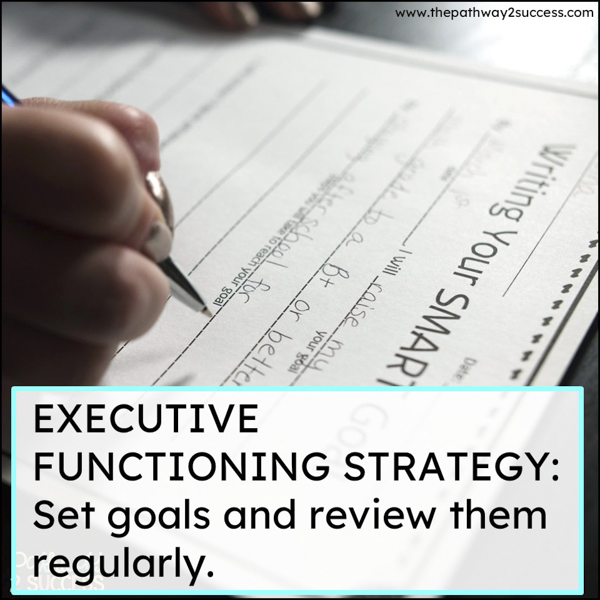
Setting goals helps us create a roadmap to achieving the things we want in life. Instead of just wishing or hoping something will happen, it helps to set goals that are SMART.
- Specific – What exactly will I accomplish?
- Measurable – How will I measure my growth and success?
- Attainable – How will I work to achieve this goal? What steps will I take?
- Relevant – Why is this goal important in my life?
- Timely – When will I accomplish this goal by?
The next time you want to achieve something, like improving your grade in a class or joining a new sports team, pause and answer the questions above to set your own SMART goal.
Focus on High Quality Sleep
Getting high quality sleep is incredibly important for executive functioning; it helps us focus, manage our emotions, and more effectively work through challenges. Here are some tips for implementing this strategy into your life:
- Choose a consistent bedtime that works for you. Aim to get the number of hours of sleep per night that you need to be your personal best.
- Keep electronics charging in a room outside of your bedroom. This will reduce the chance that you will get distracted by videos, messages, apps, and more.
- Try calming activities before bed. Activities like reading, stretching, or deep breathing can put your mind and body in a state of relaxation.
- Prioritize physical activity earlier in the day. Whether it’s going for a run or playing basketball with friends, exercise helps to promote good quality sleep at night.
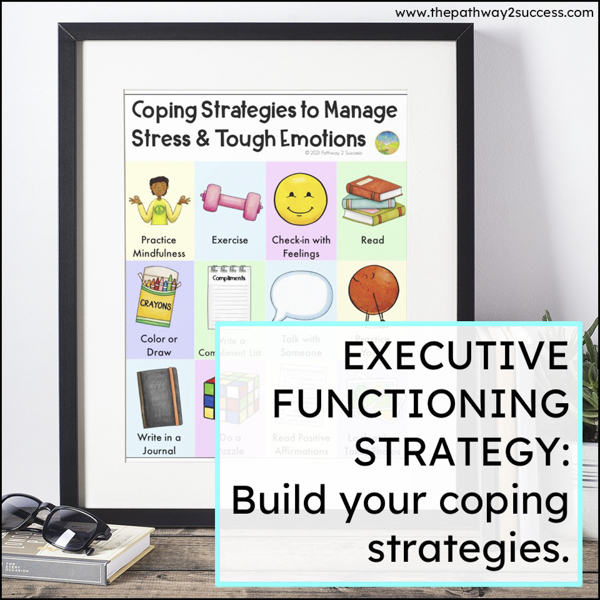
Build Your Coping Strategies Toolbox
Coping strategies are activities we use to manage our everyday emotions and stress. It’s important to build a “toolbox” of different coping strategies – that’s because different techniques are going to work at different times. For instance, you might use positive self-talk before taking a big test, while you might talk with a friend after dealing with a disappointment. Investigate and practice various coping strategies and find what works for you.
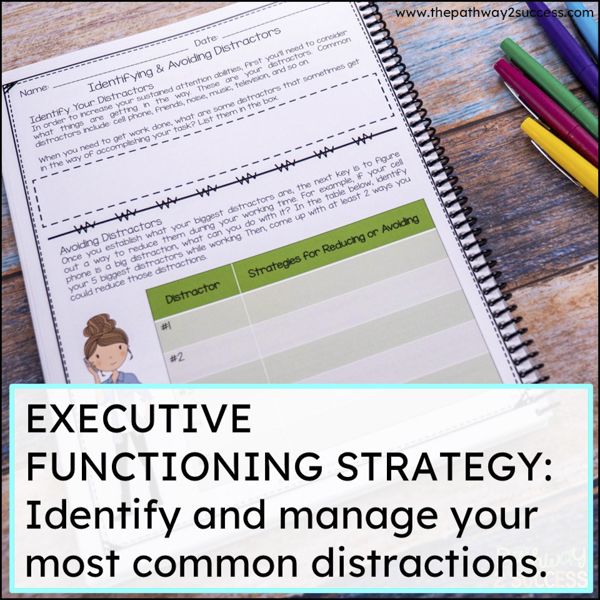
Identify and Manage Distractions
Distractions can cause huge obstacles to stayed focused, completing tasks, and achieving our goals. You might want to organize your binder, but find yourself distracted by talking with a friend. You might set expectations to study for an important test, but end up getting sidetracked on social media. The first step to managing these pitfalls is identifying what your biggest distractions are. This takes self-awareness, honesty, and self-reflection. Write these distractors down on a list. Then, come up with meaningful strategies to manage or reduce those distractions. For example, you might notice that your phone distracts you during working sessions. In that case, it might help to leave your phone in another room or turn it off while you’re focusing your efforts on a specific task.
Write in a Journal Regularly
Writing helps sort out thoughts, process emotions, reflect on experiences, and problem-solve through challenges. To give this strategy a try, set aside daily time to write in a journal or notebook. While it’s true that you can use the time to reflect on anything, here are some guided discussion questions to help you get started:
- What am I grateful for today?
- What strategies did I use today? How well did they work?
- What is a goal I’m working on? How is it going?
- What am I proud of?
- How am I feeling right now?
- What challenges have been in my way recently?
- What is something I’ve learned recently? How can it help me in the future?
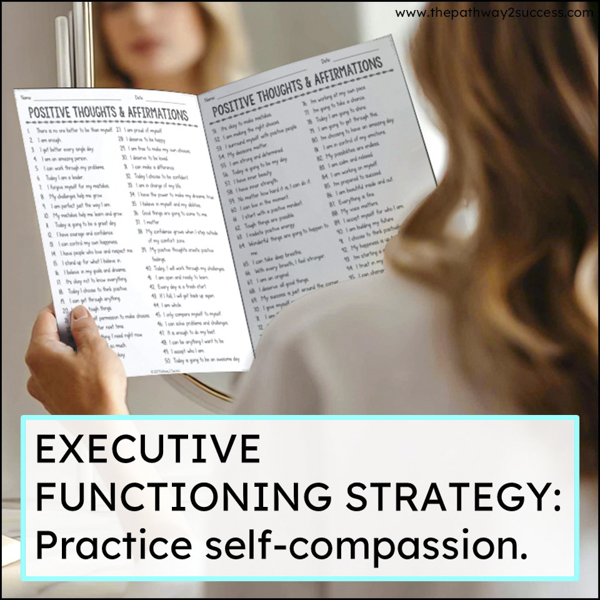
Practice Self-Compassion
Self-compassion is the practice of showing kindness and understanding towards yourself. Let’s be real – we all make mistakes from time to time. Mistakes aren’t just part of being human, they’re an essential part of the learning process! When you mess up, it’s incredibly important to be kind to yourself.
- Use positive self-talk. The words you say to yourself truly matter. Use encouraging and supportive words to guide yourself in the right direction. Remember to talk to yourself like you would a close friend. Begin with positive thoughts and affirmations.
- Begin a self-love journal. Embrace the power of writing with a self-love journal. This can give you the space to learn about who you are as a unique person.
- Create a self-care plan. Outline specific ways to take care of yourself physically, mentally, socially, and emotionally.
Building Executive Functioning Strategies
Remember that building executive functioning strategies takes time and practice. Every chance learners get to organize their materials, write out a to-do list, or set a goal for themselves is a chance to strengthen the foundation of executive functioning. Need more ideas? Check out these executive functioning lessons and activities to help students build the skills that matter the most.




Leave a Reply