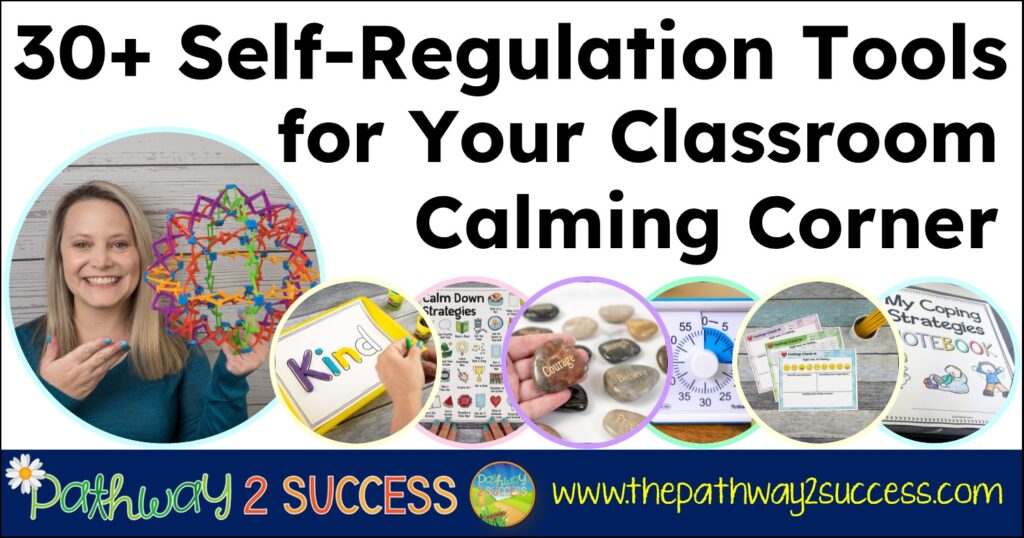
Whether you call it a calming corner, zen zone, chill out spot, or anything else, a calm-down area is an important space in the classroom to help kids manage emotions on the spot. By practicing coping strategies, students can get themselves back on track and then return back to the learning environment. Using a calming corner effectively truly is a win for both educators and the students in need.
What is a calming corner?
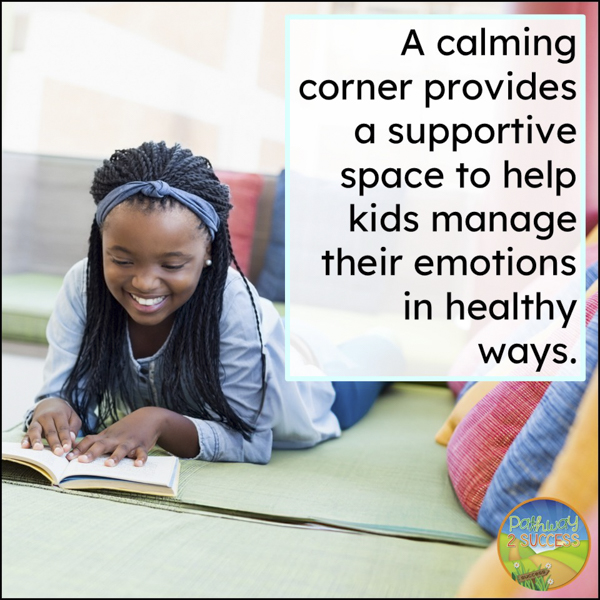
A calming corner is a quiet space kids can go when they feel dysregulated or emotionally overwhelmed. Instead of acting out in challenging ways in the classroom, the child has a supportive and private place to calm down. In the calming area, kids are encouraged to use self-regulation strategies like mindful breathing, coloring, or simple stretching. With a few minutes (or however long it takes), that child can then check in with themselves and identify when they’re ready to head back into the classroom environment.
Keep in mind that a calming corner isn’t just about having a quiet and calm space for kids. The ultimate goal is that we are teaching kids how to regulate their emotions. With practice, kids become more independent in understanding and coping with those feelings, allowing them to get back on track in the way that is best for them. This also helps build self-awareness, self-control, attention, mental flexibility, perseverance, and more.
Tools for self-regulation
Some adults first think that a calm down area is a reward center and this is simply not true! Instead, a calm down area should be purposely planned to include activities and resources focused around coping strategies for de-escalation and self-regulation. This includes items like coloring pages, mindful breathing cards, journal pages, and more. Games, computers, and other “fun” rewards should be avoided from the start to instill the idea that a calm down area has a therapeutic purpose. Some students later on may be able to utilize certain devices as a calm-down tool, but it’s best to start without them.
What tools can kids use in a calming corner?
Self-regulation tools are the foundation of a great calm-down area in the classroom. As always, different tools and strategies are going to work for different kids. Use this list as a starting point to help you find what works for your individual students.
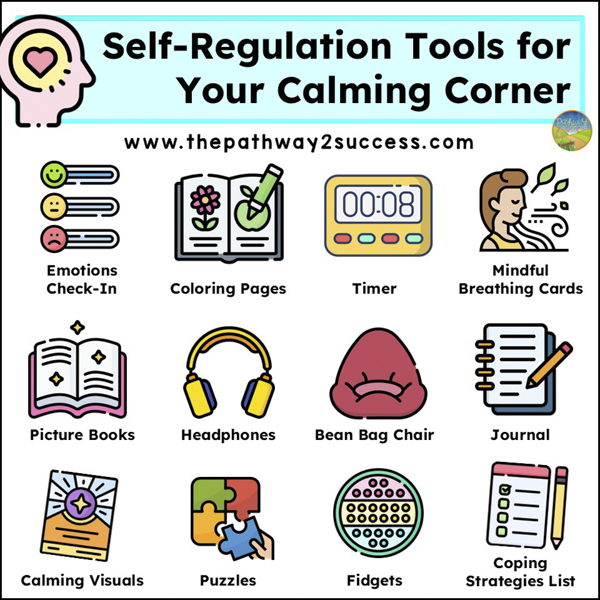
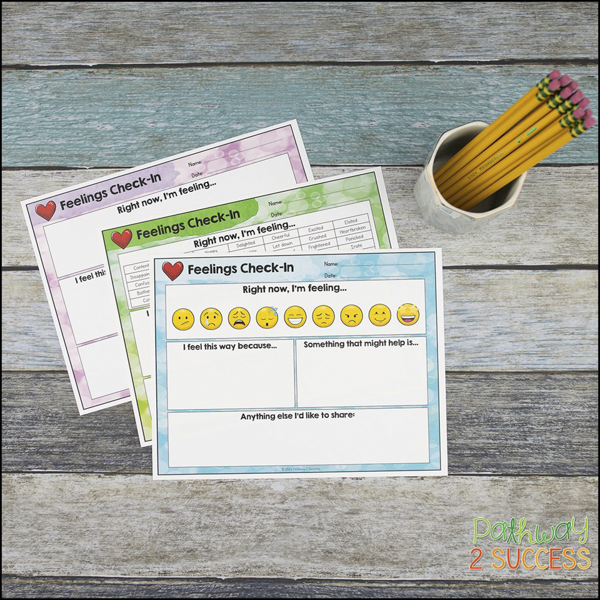
Emotions Check-In. Provide students with emotions check-in worksheets to help them process their feelings. It helps to include some simple open-ended prompts such as “Right now I’m feeling…” and “I feel this way because…”. Some students may also benefit from visuals or a vocabulary word bank to help them express how they feel.
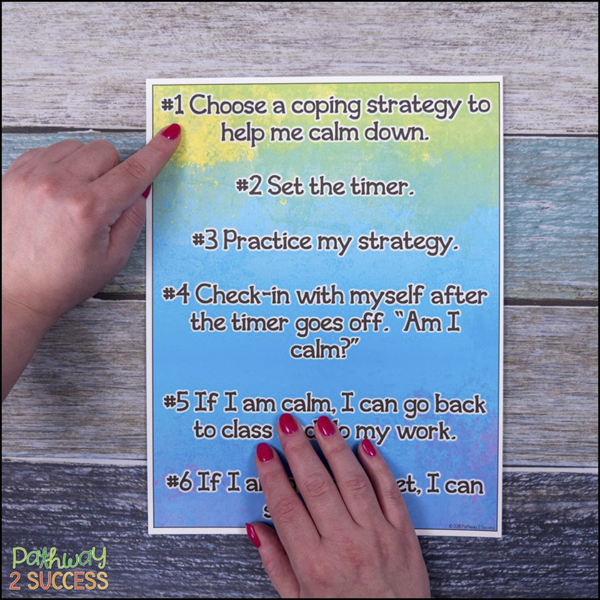
Expectations Posted. Clearly posted expectations help students use the calming area in the most effective way. Different expectations may work for different classrooms, but here’s a simple starting point:
- Choose a coping strategy to help me calm down.
- Set the timer.
- Practice my strategy.
- Check in with myself when the timer goes off.
- If I feel calm, I can head back to class.
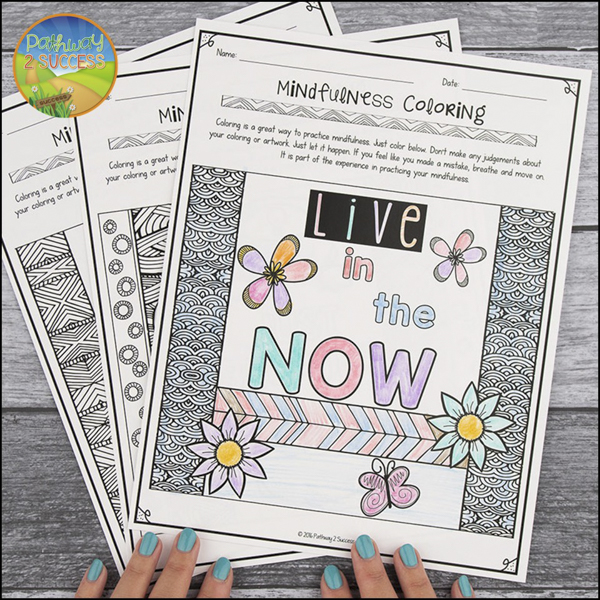
Coloring Pages. Coloring is one of the most calming activities for many kids and young adults. Keep in mind that coloring books do not have to be for little kids! There are many inexpensive adult coloring books that make great calm down tools for middle and high school kids. It can be helpful to tailor the coloring selections to your individual students, too. You might have a dragon coloring book for one student, cats for another student, and just geometric designs for a third. Grab these free mindfulness coloring pages to store in your calm down area today.
Colored Pencils. When it comes to coloring utensils, colored pencils are one of my favorites. These leave much less of a potential mess than pens or markers, and they are perfect for some soothing mindful coloring. Crayons are another good option.
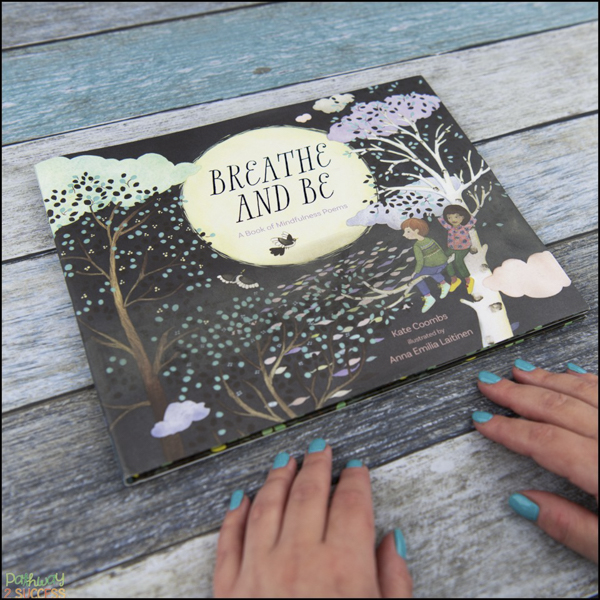
Picture Books. An important point here is that picture books are appropriate for all age/grade levels, even older kids! Reading a short story can be incredibly soothing. While any short stories will do, it helps to choose books with calming themes. Some good books to include:
- Breathe and Be by Kate Coombs
- I Am Peace by Susan Verde
- My Magic Breath by Nick Ortner and Alison Taylor
- Charlotte and the Quiet Place by Deborah Sosin
Pillows. Extra pillows in a calm down area help with physical comfort and support. Kids can use pillows to lie on, give a soft hug, or just rest their heads on.
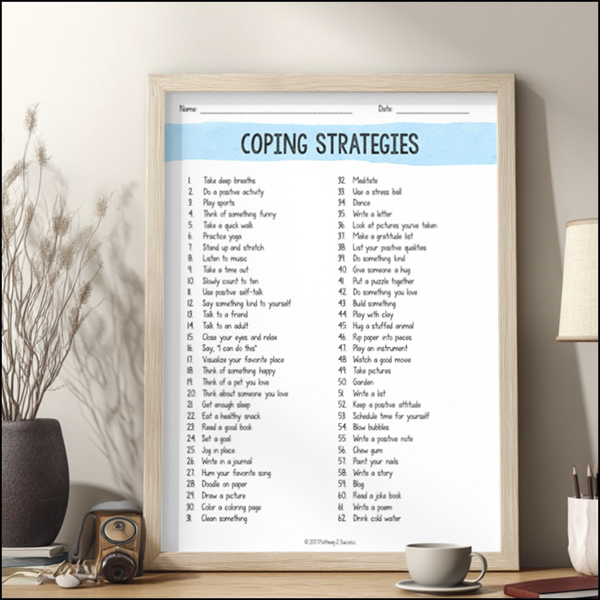
Coping Strategies List. Having a list of coping strategies in your calm-down area helps remind kids what calming activities are available to them.
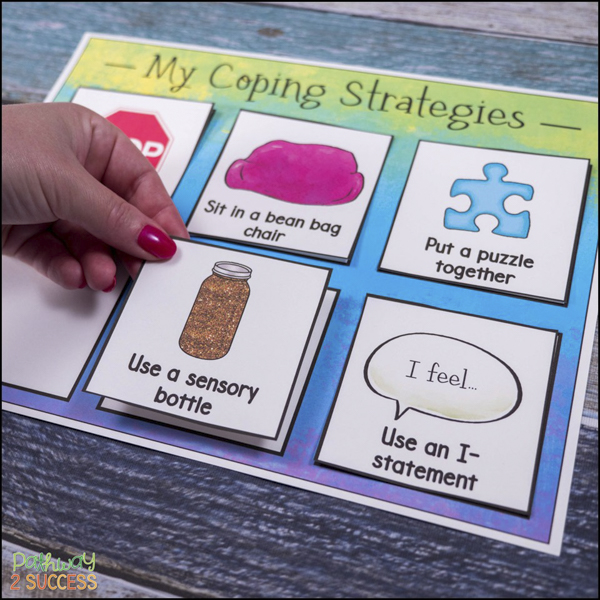
Individualized Coping Strategies List. It’s often helpful to go one step further and make an individualized list for your students, allowing them to select the coping skills that work best for them. For instance, a student might include coping strategies like practicing deep breathing, exercising, sitting in a bean bag chair, reciting positive affirmations, or using a sensory bottle. Get started making your own individualized coping strategies posters together. Keep in mind that it’s important to introduce and practice these coping strategies together ahead of time.
Headphones. Wearing a pair of headphones can help block out distractions, helping kids focus on their own thoughts and feelings in the moment. These don’t need to be super expensive, but over-the-ear headphones are often best to reduce sensory input. While you don’t actually need any extra sounds, you can consider adding a simple music device to play soothing music, nature sounds, or guided breathing meditations.
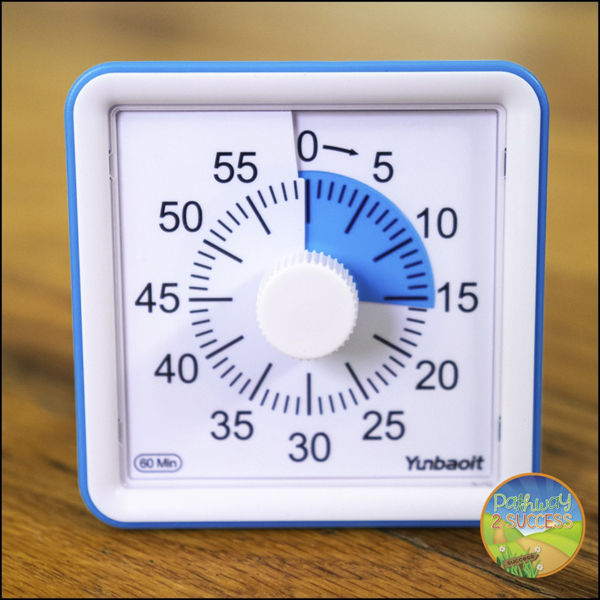
Timer. Having a timer is important so that kids give themselves a set amount of time to calm themselves down. An adult can set the timer or you can teach kids to do it. They don’t have to be calm by the end of the timer, but it’s helpful for them to “check in” with themselves after 5 or 10 minutes. They should consider how they are feeling and if they find themselves ready to return to the main part of the classroom. If not, they should set the timer again and continue with calming activities. My favorite timer is a visual timer because it shows exactly how much time has passed and how much more there is to go.
Bean Bag Chair. Having a comfortable space to sit or lie down can help set the tone for relaxation. For this reason, bean bag chairs can be the perfect addition to your calm down area.
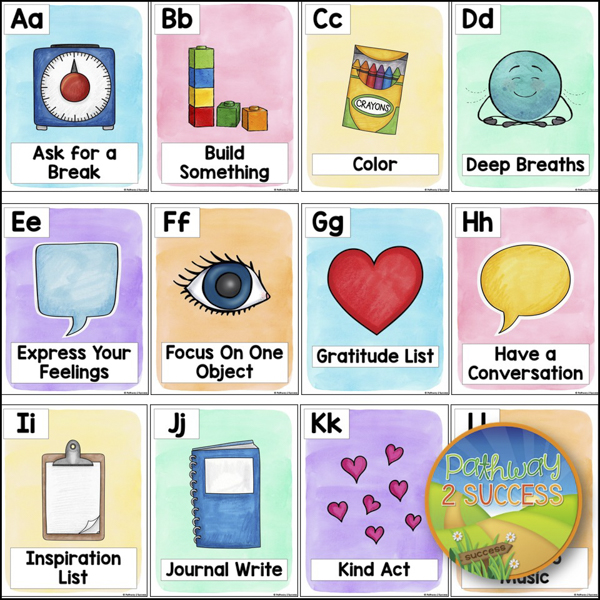
Calming Corner Visuals. Use coping strategies posters as visuals to remind students of their calm-down strategies. This also provides an opportunity to decorate your calm down area, making it beautiful, relaxing, and inviting for students.
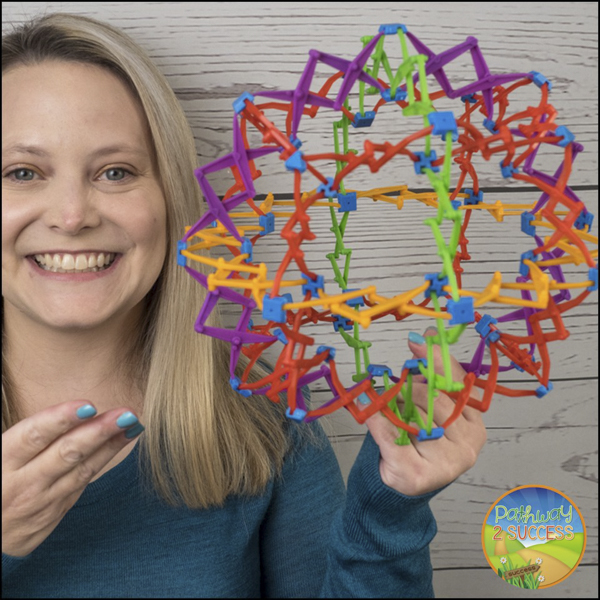
Hoberman Sphere. One of my favorite hands-on self-regulation tools is a Hoberman sphere. It is a geometric shape that easily expands and contracts with a simple pull. Not only does this feel calming to try, but it also mimics the air in our lungs as we inhale and exhale. It’s definitely a tool worth having, especially for kids who need more hands-on opportunities.
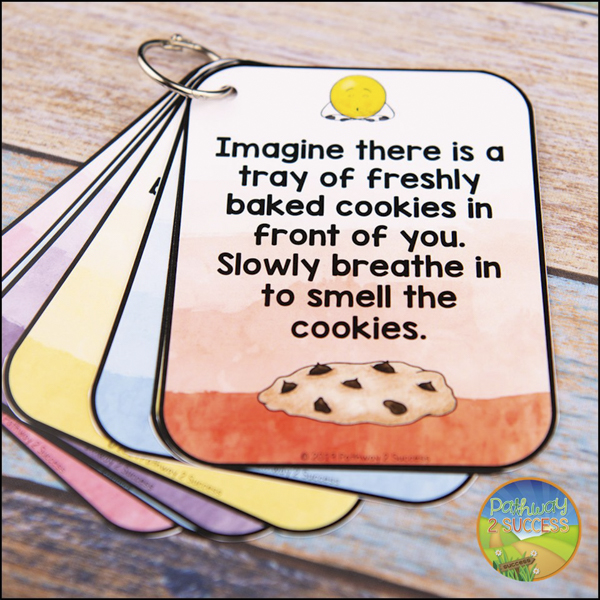
Mindful Breathing Cards. Add your favorite mindful breathing exercises onto a ring for students to flip through as they practice. Make sure to include some of the most fun breathing techniques like “Smell the Cookies” and “Cool Off the Pizza.”
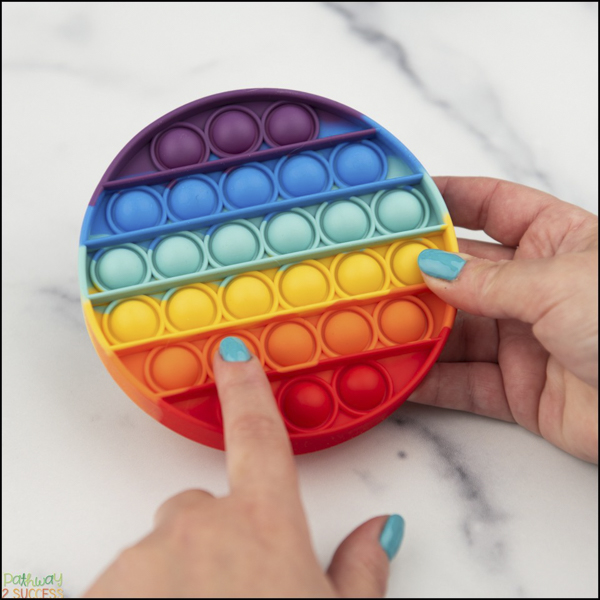
Fidgets. Having something tangible to fidget with can help the mind relax. Fidgets can come in all shapes, textures, and sizes. Various fidgets include: therapy putty, zippers, bean bags, stress balls, fidget spinners, plastic nuts and bolts, key chains, and Velcro. Get an assortment of these and place them in a fidget bin so that kids can choose which fidgets work best for them.
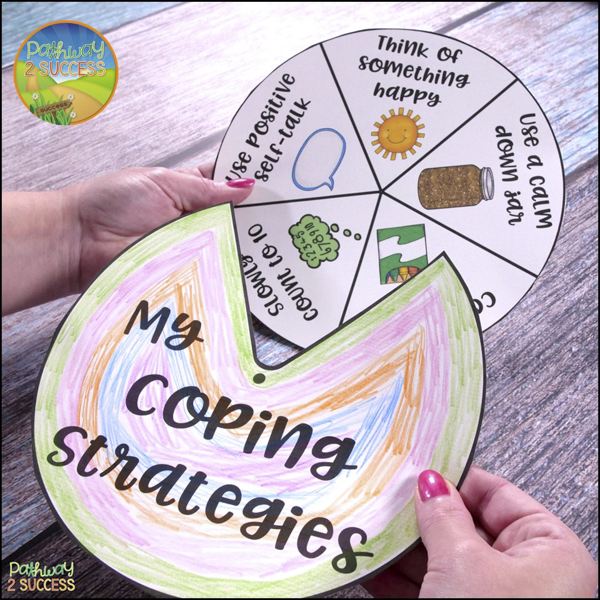
Coping Strategies Wheel. Empower kids to choose their own calm-down activities with a coping strategies wheel. The idea is really simple: students create their own individualized wheel filled with coping strategies that help them manage their emotions most effectively. For instance, a student might have activities like using a calm down jar, using positive self-talk, and color.
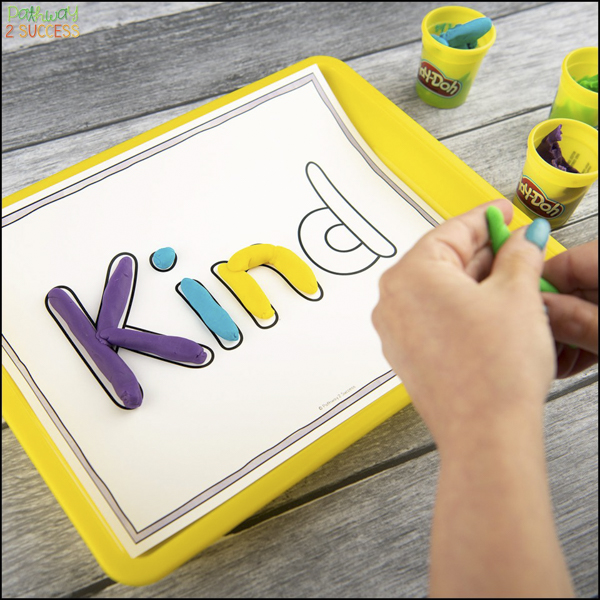
Putty or Dough. Therapy dough or putty helps provide a hands-on way to manage stress and tough emotions. Kids can manipulate the dough with their hands and build with it. You can also practice combining the therapy dough with positive affirmation cards, giving kids a little more guidance on how to use the dough. Note that it’s helpful to keep individual tubs of dough for students, giving them a sense of responsibility and ownership for their own materials.
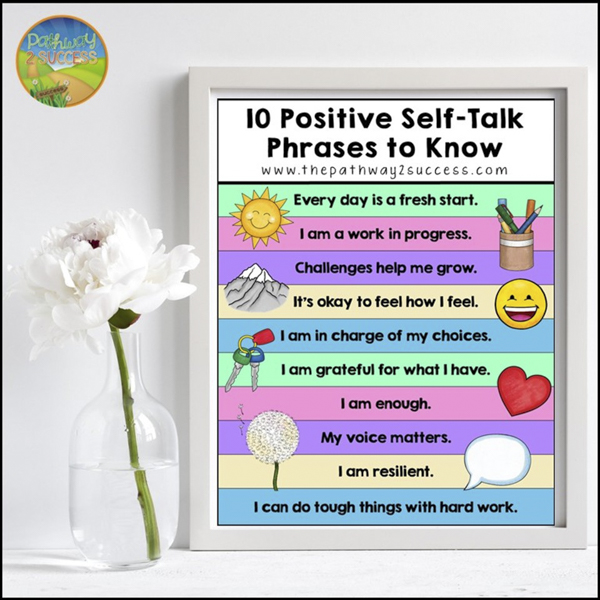
Positive Self-Talk List. Keep a simple list of favorite positive affirmations in your calm-down area. Reading the self-talk statements can help kids feel calmer as they build their compassionate inner voice. Some favorite phrases to include:
- Every day is a fresh start.
- It’s okay to feel how I feel.
- I am enough.
- Challenges help me grow.
- I am resilient.
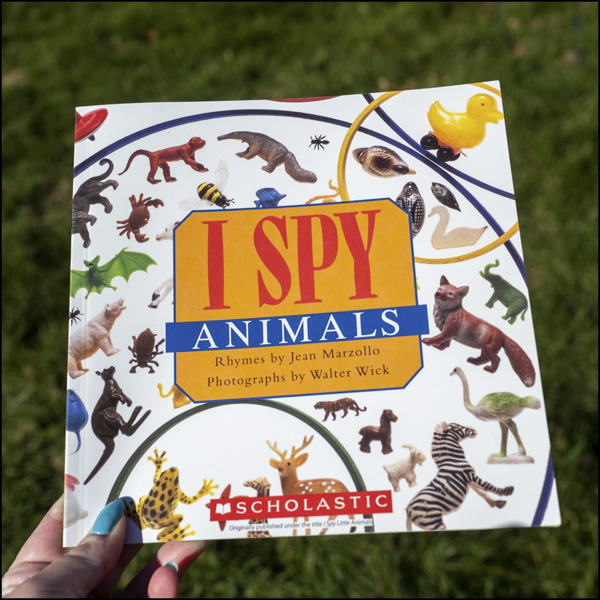
I Spy Books. Using an “I Spy” book can be an engaging challenge for kids. As they seek for items, they’re also building skills for attention, flexibility, and perseverance.
Weighted Vest or Blanket. Help kids feel safe, calm, and secure with a weighted vest or blanket. These provide deep pressure, which can promote feelings of relaxation – like a hug!
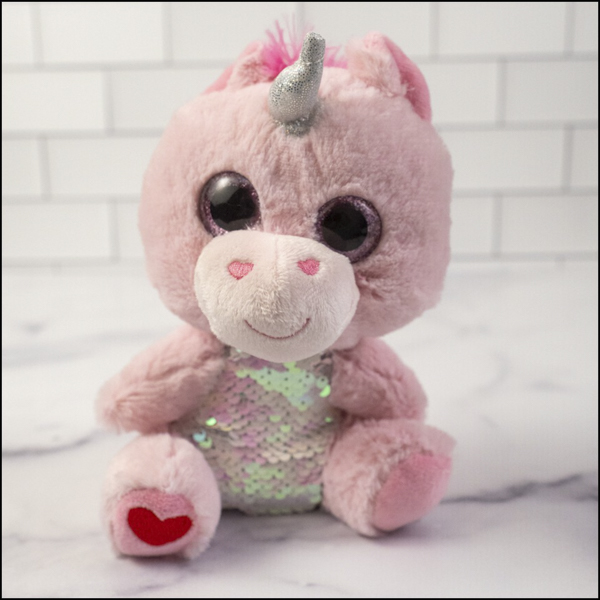
Stuffed Animals. For younger students, stuffed animals are a great option for your calm-down area. Children can hold, hug, or even talk to the stuffed animals. With that said, it helps to purchase washable stuffed animals so they can be easily cleaned from time to time.
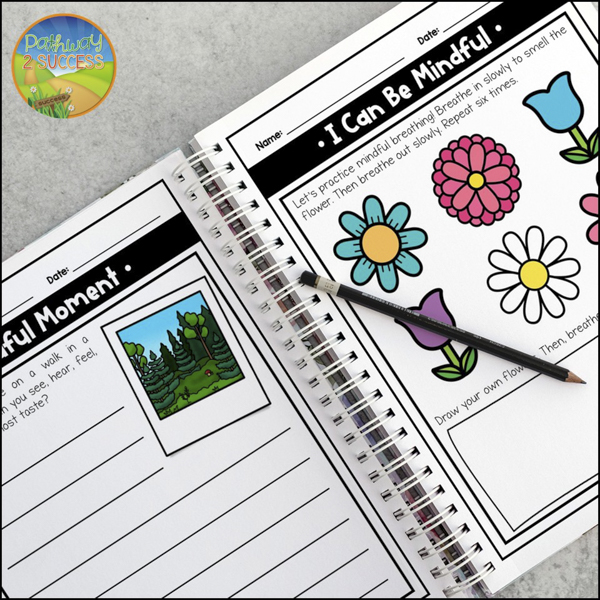
Mindfulness Journal. Keep a mindfulness journal handy for kids who benefit from writing. Some of my favorite mindful journal activities include:
- Affirmation List – Write out your favorite positive self-talk phrases.
- From A to Z – Using a letter, list (or draw) all the words you can think of starting with that letter.
- Emotions Check In – Share your thoughts and feelings.
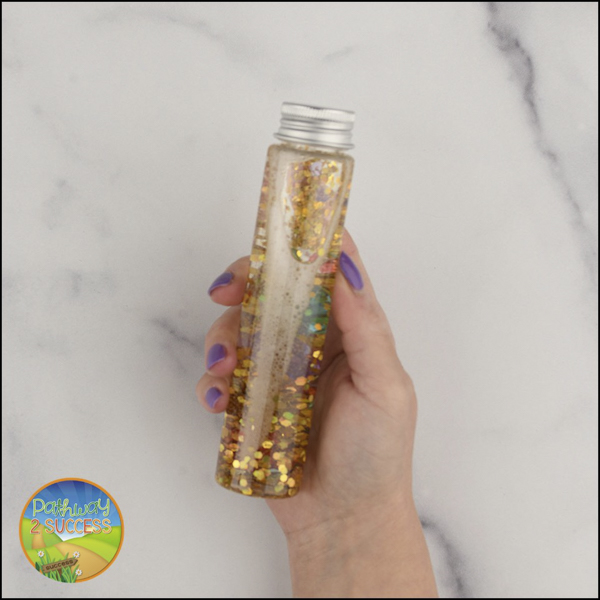
Sensory Bottles. A sensory bottle provides kids with a visual and physical calming experience. These sensory bottles are just bottles with objects inside. They can include water or have only dry ingredients. You can buy one pre-made or you can create them yourself. The best part about making your own is that you can customize it or make many different ones. Some options of materials to have inside sensory bottles include: beads, glitter, marbles, buttons, sequins, legos, sand, confetti, and magnets. Whatever you choose, make sure the cap is glued or on super tight so that kids cannot make a mess.
Kinetic Sand. Many kids and teens find kinetic sand extremely calming. Since it can get messy, it helps to keep your sand in a designated container. Feel free to also add tools like shovels and molds.
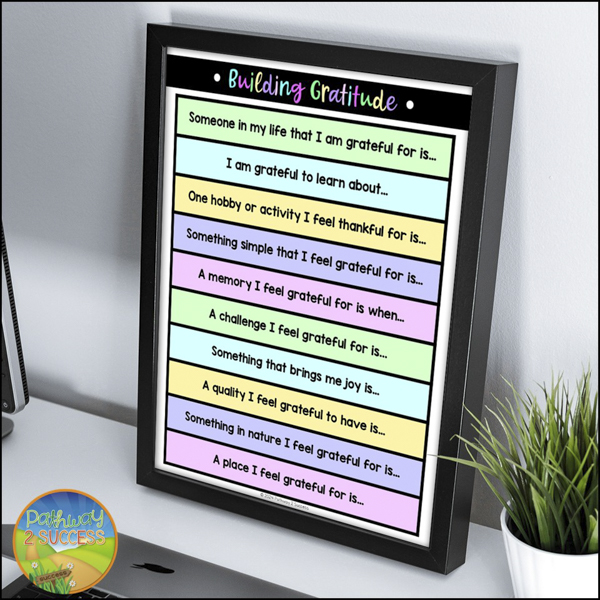
Gratitude Sentence Starters. Keep a simple gratitude sentence starters poster to encourage students to appreciate people and things in their lives. Practicing gratitude helps us shift our thinking in positive ways. Some of my favorite sentence starters are:
- Someone in my life that I am grateful for is…
- A place I feel grateful for is…
- Something that brings me joy is…
- A memory I feel grateful for is when…
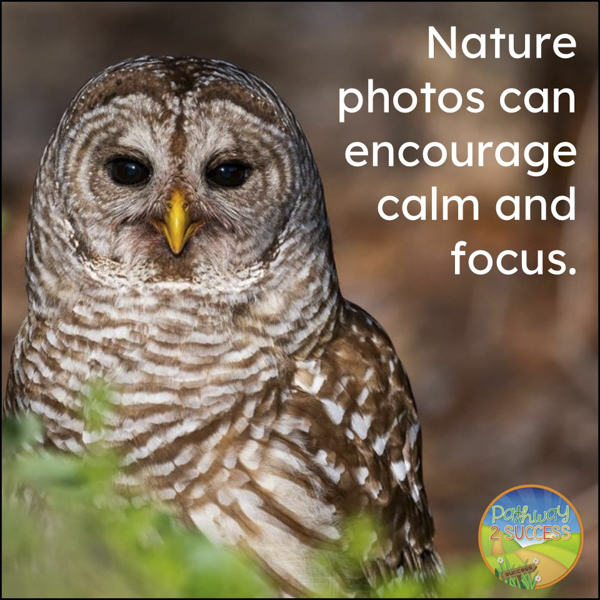
Nature Photos. Looking at nature photos is inherently calming. Keep a set of photos for kids and teens to look through – include wildlife, landscapes, plants, and anything else. As a nature lover, I put together a set of wildlife photos with positive affirmations – two coping strategy activities in one!
Free-Write Journal. A journal is the perfect place for kids and teens to share their thoughts, express feelings, or just jot down ideas. It helps to give each student their own individual journal. Consider allowing kids to decorate the outside of their journal, allowing them to personalize and “own” their free-write space.
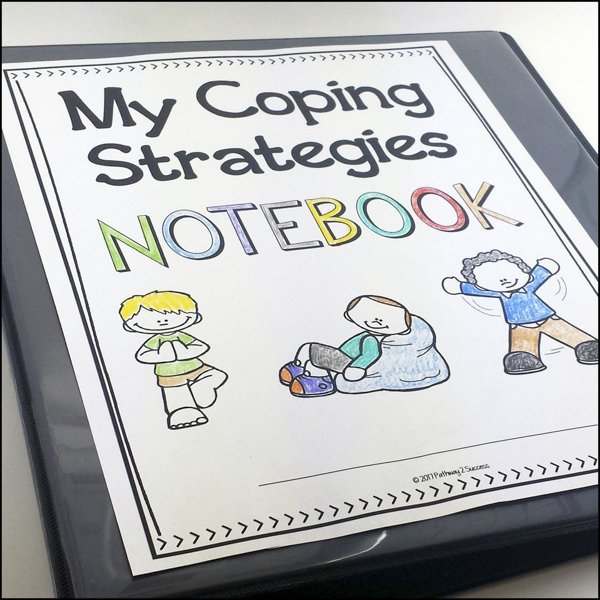
Coping Strategies Notebook. Each individual is going to have their own coping strategies that work best for them. For example, some kids calm down more quickly with coloring while others need the physical outlet of playing with putty. If a student frequently needs to utilize a calm down area, it’s helpful to make a coping strategies notebook with them to help teach which strategies they might want to use. This notebook should store pages and pictures with the student performing their most helpful coping strategies. It’s important to note that coping strategies need to be first practiced when a child is calm. This is so that they will have the ability to utilize those strategies when feeling angry, anxious, or stressed. The coping strategies notebook then serves as a physical, visual, and written reminder about all of those strategies on an individual basis.
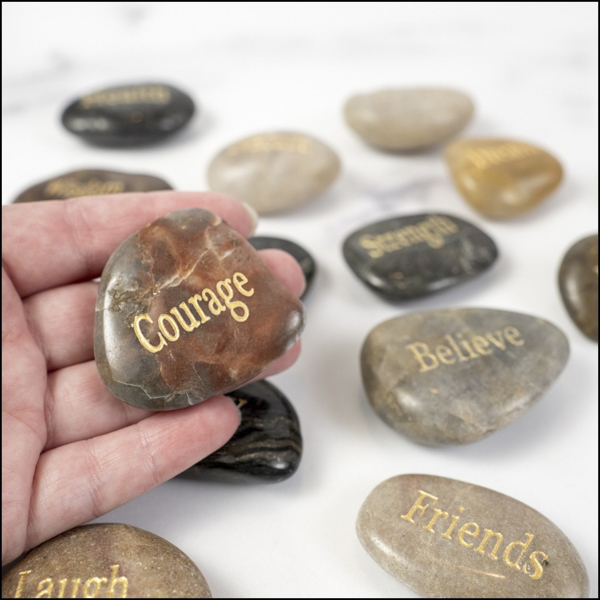
Worry Stones. Something about holding a stone in your hand is extremely calming. Use worry stones as a hands-on tool. Many also come with supportive and inspirational words.
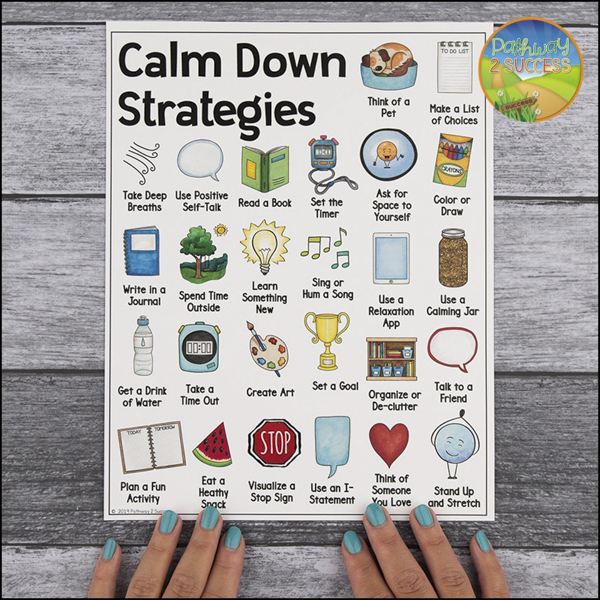
Calm Down Strategies Posters. Keep posters up that remind students about their calming strategies. Students can even use the poster to select which activities they want to use in the calm down area. Grab this set of calm down strategies posters for your classroom.
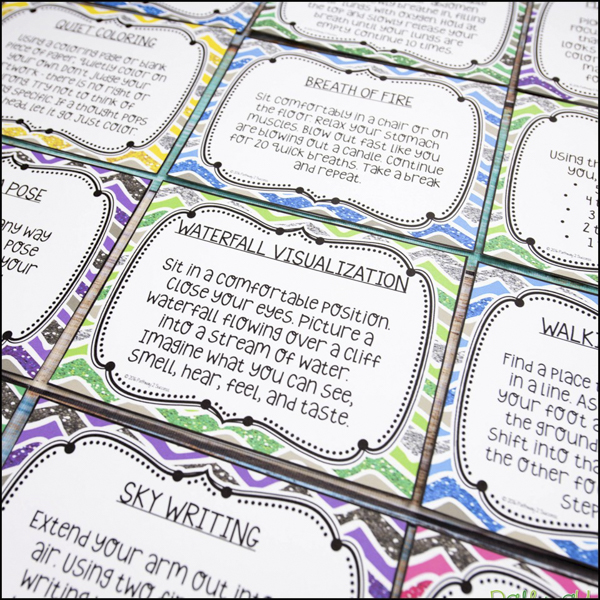
Coping Strategies Cards. Another helpful option is to have favorite coping strategies right on cards for students to access. Put them on a ring so kids can flip through to find the coping strategy they need.
Visualization Cards. Picturing a calming place can help kids feel calm and relaxed. Include cards to help kids picture peaceful places such a s a beach, forest, starry night sky, or anywhere else.
Positive Self-Talk Cards. Encourage students to write their favorite positive self-talk phrases on index cards – students can even color or draw on them. Keep these together in the calm-down area to read.
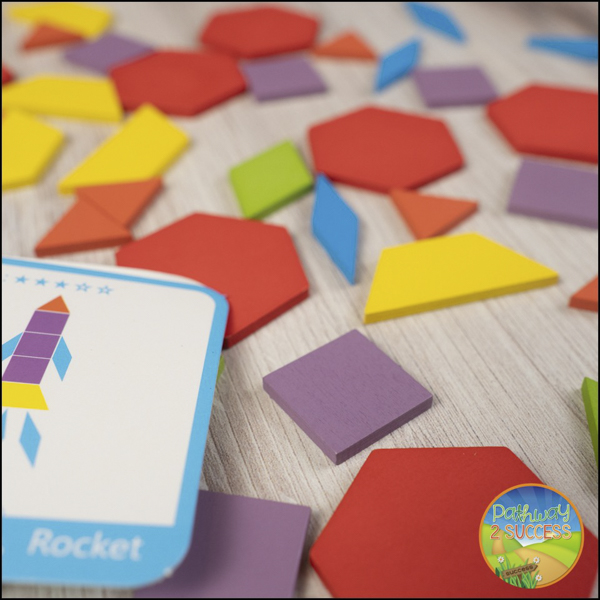
Puzzles. Building and completing a puzzle is often very calming to the central nervous system. While kids are working at finishing a puzzle, they are also using executive functioning skills by planning, initiating, and attending to the task. Depending on the age and ability level of the students, you can choose puzzles at different levels of difficulty. While any puzzle will do, one of my favorites to include is tangram puzzles.
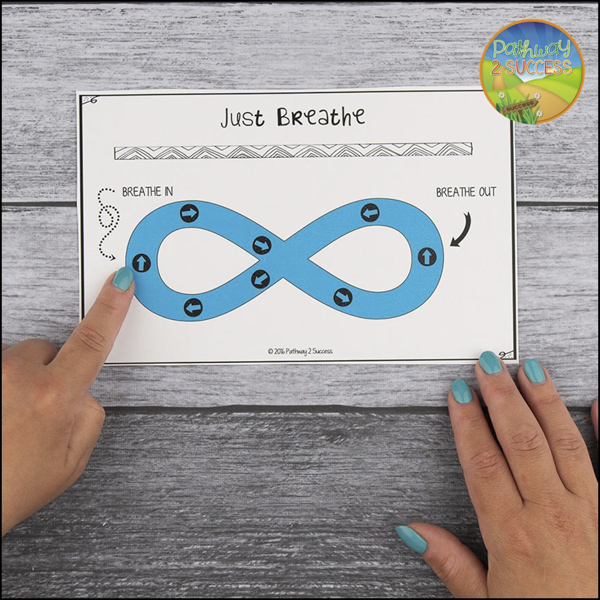
Mindful Breathe Boards. A breathe board is a simple visual students can use to practice mindful breathing. By following the breathe board with their finger, your student can focus on their inhales and exhales.
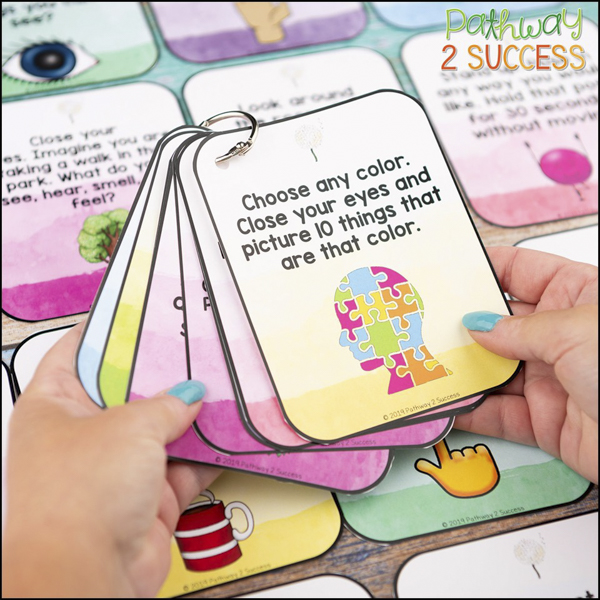
Mindfulness Exercise Cards. Put your favorite mindfulness exercises on a set of cards. Then, put them together on a ring. This makes it easy for students to practice mindfulness entirely on their own in the calm down area.
Brainteasers. Some students may benefit from extra mental puzzles like brainteasers. Use a printable brainteaser booklet to keep in your calm down area, or come up with your own thinking puzzles. Different puzzles are going to resonate with different learners, so feel free to try word searches, crosswords, word scrambles, Sudoku, and pattern activities.
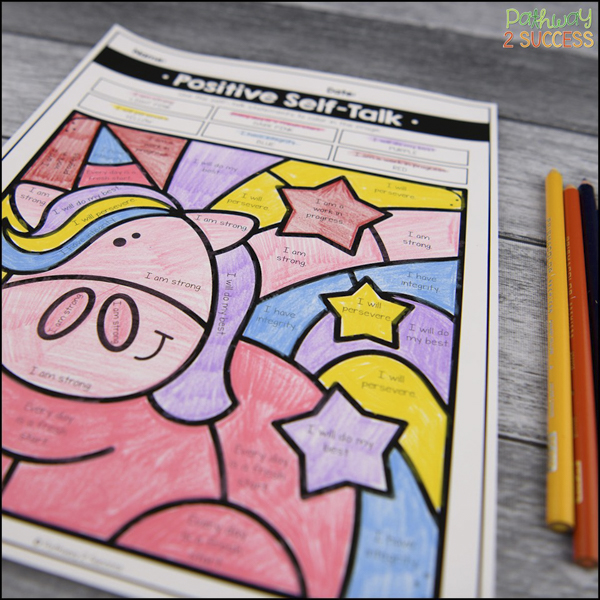
Positive Self-Talk Coloring Pages. Coloring pages on their own are great, but it’s also beneficial to try some positive self-talk coloring pages in your calm down area. Each page helps kids practice positive affirmation aimed for calm, focus, and confidence.
Blocks. Blocks give kids the chance to create something, knock it down, and start over again. They also encourage creativity and problem-solving. From wooden blocks to kinetic ones, there are many different kinds, so find the set that works for you and your students.
Final thoughts
Different self-regulation tools are going to work for different individuals; take some time to find the ones that work for your learners!



Leave a Reply