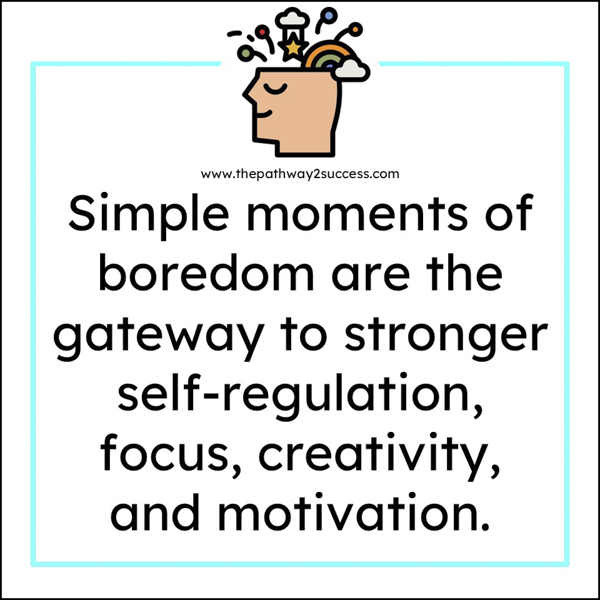
In many ways, the idea of “being bored” has a negative connotation. When we think of being bored, we often imagine listening to a lecture that isn’t interesting or having to wait in line. But boredom is so much more than this; those simple moments of boredom are the gateway to stronger self-regulation, focus, creativity, and motivation. Instead of running from bored experiences, we need to learn to embrace them.
When we are bored, part of our brain called the default mode network switches on. Once activated, this network is responsible for introspection, allowing us to reflect, brainstorm, daydream, and generate ideas. Allowing kids and young adults to experience boredom is incredibly important. Unfortunately, today we miss many of those opportunities. This is especially true because we’re used to filling those empty gaps with watching videos or scrolling through social media feeds on our phones. We are so used to distracting ourselves that we forget how to experience boredom effectively in the first place.
Practicing being bored is intentionally giving time for mental rest and mind-wandering, free from distractions. The good news is that we can learn strategies and techniques to help us learn how to practice being bored.
Why is learning to be bored a critical skill for success?
Being bored builds a number of skills that are foundational to success for kids, teens, and adults alike. Here are just a few quick reasons why being bored is important:
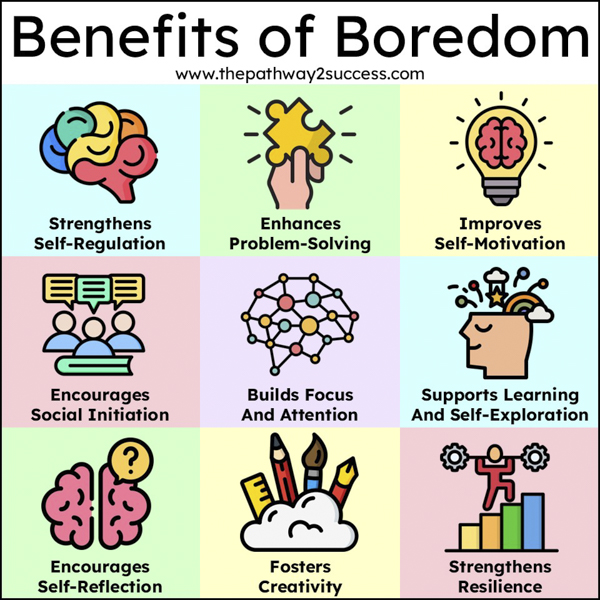
- Strengthens Self-Regulation – Time to “just be” gives us time to sit with our thoughts and feelings. In turn, this becomes a chance to regulate and manage our everyday emotions. Instead of constantly avoiding our feelings, practicing quiet moments can let those emotions come and go.
- Enhances Creativity and Problem-Solving – Being bored builds creativity and problem-solving skills. When we’re left alone to let our mind wander, we can consider important questions, think up new ideas, and problem-solve through challenges in our lives. Keep in mind that this doesn’t have to be a forced effort. Many great ideas come up just from giving your brain space to think freely.
- Improves Motivation – Boredom builds motivation. It gives space to consider goals for the short-term and the long-term. Learning to cope with those quiet moments even makes it easier to do mundane tasks, like begin a math assignment or unload the dishwasher.
- Encourages Exploration – As the feelings of boredom run their course, it helps open the door to exploring new ideas and activities – often many things we wouldn’t have even thought of if we hadn’t given space to feel bored in the first place.
- Builds Focus – Embracing periods of boredom help build a number of executive functioning skills like focus and attention. Learning to cope with boredom ultimately helps us effectively manage distractions and stay targeted on what we’re doing.
- Encourages Social Initiation – When we’re feeling bored, it might encourage us to reach out to a friend or start a new conversation. Initiating social experiences in this way paves the way for all sorts of other social learning opportunities.
- Supports Self-Directed Learning – During periods of boredom, we begin to get interested and learn new concepts we might have otherwise missed. This also allows us to take ownership of our own learning.
Here are a few strategies to try with kids and teens, or even just on your own:
Practice Mindfulness
Mindfulness is the practice of focusing your attention on the present moment. Instead of worrying about what happened in the past or what will happen in the future, you are guiding your attention to the “right now.” Besides teaching us how to cope effectively with feeling bored, mindfulness is an evidence-based strategy to boost attention and emotional regulation. It’s worth giving a try.
One simple strategy for mindfulness is focusing on your inhales and exhales as you breathe. To give this a try, sit in a comfortable position and relax your body. Close your eyes if that helps you feel at ease. Slowly breathe in and out. As you breathe in, focus on the feeling as the air flows inward. As you breathe out, focus as the air exits your body. At some point, your mind is going to wander. That’s okay! Once you notice your mind has wandered, just return back to the breathing. You can also try counting your inhales and exhales if that helps you stay focused. Try this exercise for 5 or 10 minutes at a time.
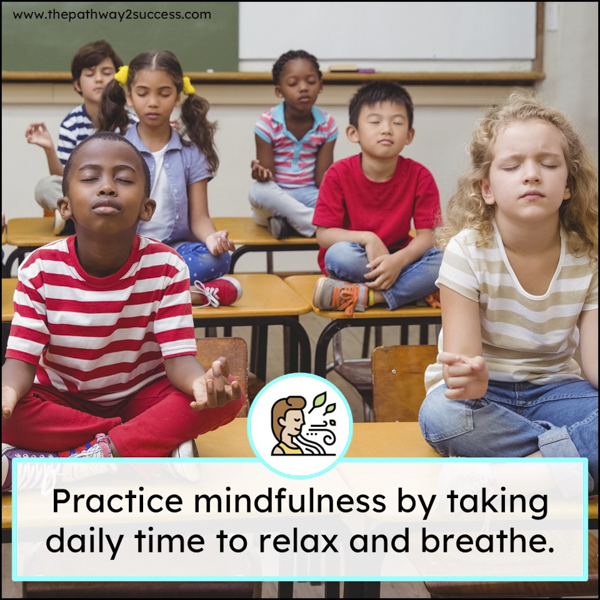
For some, practicing mindfulness in this way can absolutely feel “boring” in the moment. Recognize those feelings and just keep trying the exercise. Over time, it does get easier. Most importantly, this is an incredibly powerful technique to use whenever you might feel bored in real life, whether it’s waiting in line at lunch or before a long lecture in class.
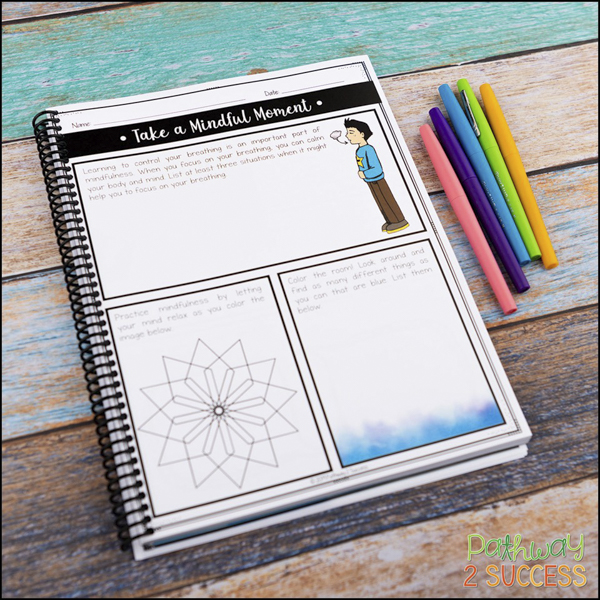
Since mindfulness also helps strengthens attention and self-regulation skills, it makes the perfect addition to any classroom. You can practice mindfulness with students as part of a morning routine or between activities as a brain break. If you’re not sure how to get started, grab this full yearlong mindfulness journal, perfect to help kids and teens embrace the moment. With that said, if you’re not ready for a full journal, you can also try a free 5-step mindfulness check-in activity to set the tone for success.
Take Time for Nothing
In our overly busy world, sometimes the best solution is taking some time dedicated to absolutely nothing. To give this a try, sit in a comfortable spot and set the timer for 5-10 minutes. Make a commitment to yourself to leave all other distractions behind for this short amount of time. Let your mind wander as you glance around the room or stare out the window. You can also try closing your eyes. The important part is that you are practicing being bored by not engaging in anything.
You can try this in the classroom by taking a short “do nothing” break with your students between tasks. It can serve as a healthy way to refresh focus and strengthen inner calm during the school day. Remember to start with small intervals and encourage learners to be patient with themselves as they give it a try.
Schedule Device-Free Time
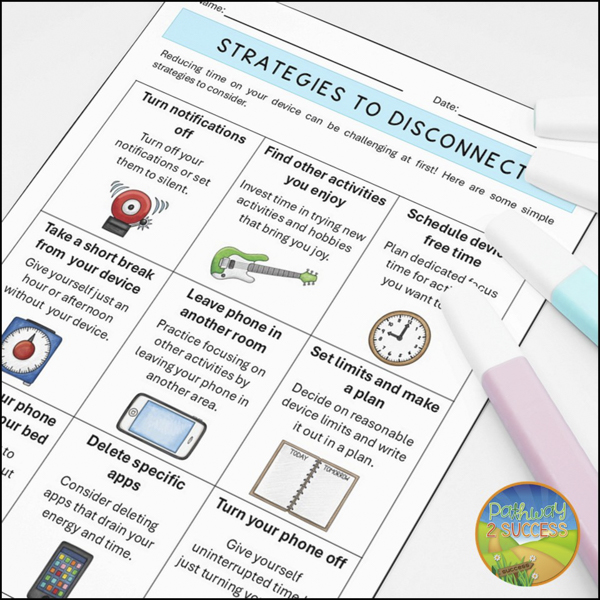
Give yourself a block of time with your devices like ipads, televisions, and phones turned completely off. You can even try locking up your phone or leaving it in another room – whatever works for you! What’s important is that you set a timer and do anything else during that time. You might doodle in a notebook, organize your bag, or just sit and relax in a comfortable position.
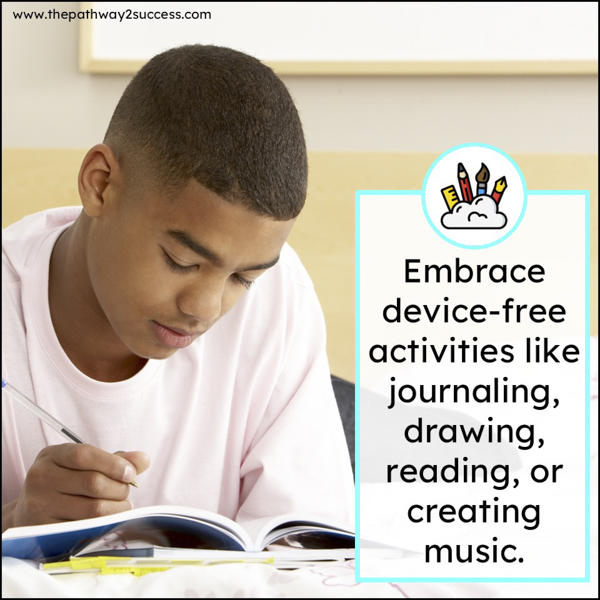
You can encourage this strategy with kids and teens by explaining why it helps them to reduce digital time in their lives. You can also discuss device-free activities students can try such as writing in a journal, reading a magazine, putting together a puzzle, or practicing guitar. Use this free set of worksheets to start the discussion about reducing device time – some reminders we all need from time to time!
Practice Mono-Tasking
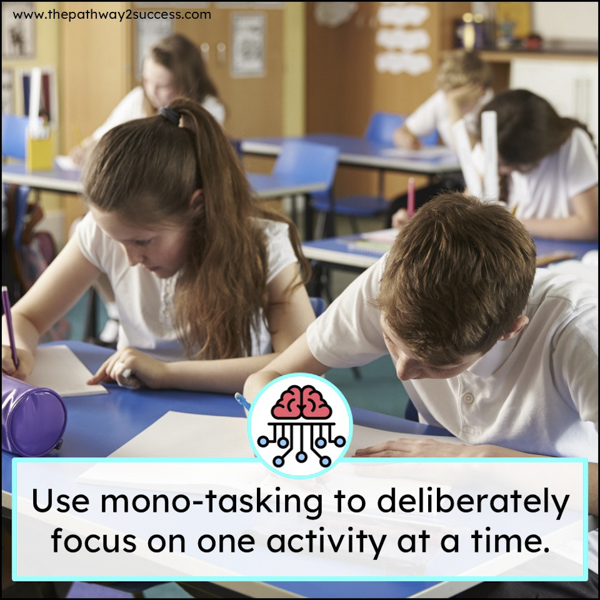
The opposite of multitasking, mono-tasking is intentionally focusing on one task at a time. When you have a task to complete, make an agreement with yourself to stick with just that activity before moving on to something else. For instance, you might try mono-tasking for writing an essay or folding your laundry. At some point during the task, you will begin to feel bored or tired of doing that activity. That’s good, because this is where the practice comes in. Let yourself feel bored and remember to resist any potential distractions. Try breathing in slowly, taking a short stretch, or using positive self-talk to keep you on task. It’s okay to take a moment to yourself, but stay committed to sticking with the task!
In the classroom, you can help your students practice mono-tasking with simple and short activities to start. First, explain the process. It also helps to let students know that mono-tasking improves focus and helps us complete tasks effectively. To give this a try with students, have kids clear off their desks. Then, encourage them to complete one single short assignment on their own. This also involves a bit of perseverance and self-control, since the goal is for students to stick with the task without giving up, despite distractions along the way.
You can also encourage students to give mono-tasking a try at home when they complete simple tasks like emptying the dishwasher or cleaning their room.
Get Outside
Spending time in nature has been shown to have many benefits. Being outside helps improve our moods, boosts our focus, and reduces stress. It also serves as the perfect technique for learning how to be bored. Give this strategy a try by relaxing in a chair outside and watching the outdoor world around you. Keep distractions like your phone away (preferably completely out of sight). You might see birds flying by or leaves blowing in the wind. No detail is too small! Just sit and observe for a bit.
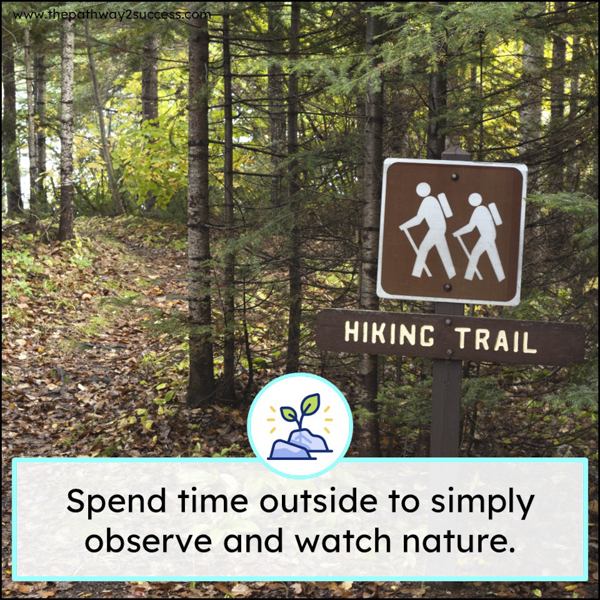
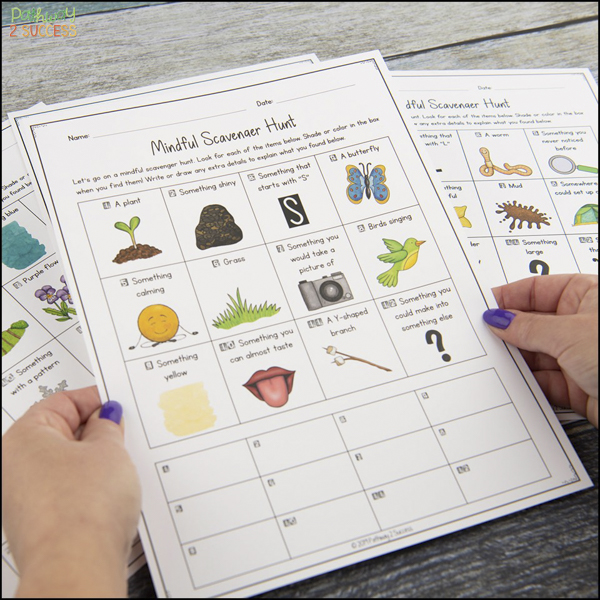
You can try this out with students by taking a short nature walk. Let students know that they will be going for a short walk together. Encourage kids to observe their surroundings, including what they see, hear, smell, feel, and almost taste. Not only does a nature walk serve as a fantastic brain break for attention and self-regulation, it’s one of the simplest ways to get comfortable with feeling “bored” in the moment.
Bonus strategy: Turn your nature walk into a mindfulness scavenger hunt!
Engage in Simple Hobbies
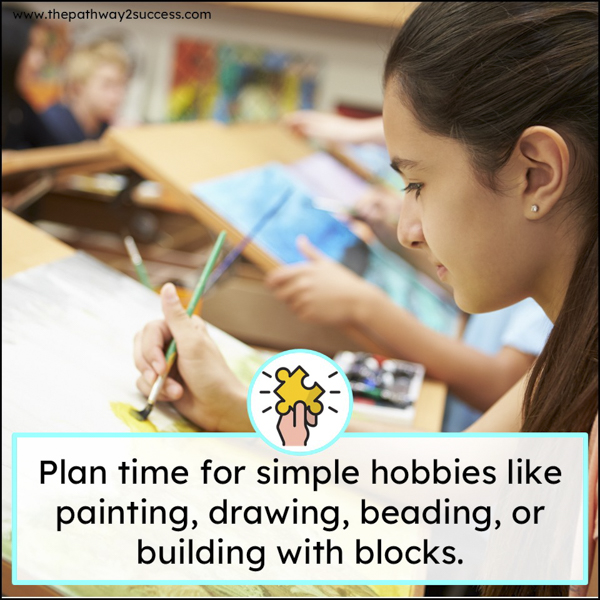
Engaging in simple hobbies helps us cope with boredom and boost focus in real time. Choose activities that can be done mindfully, such as knitting, painting, beading, drawing, coloring, or building with blocks. Set a timer for a block of time you’d like to stay focused and go!
If possible, encourage students to embrace some of these hobbies on their own time. You could even try teaching them during art classes or study hall.
Take Curiosity Breaks
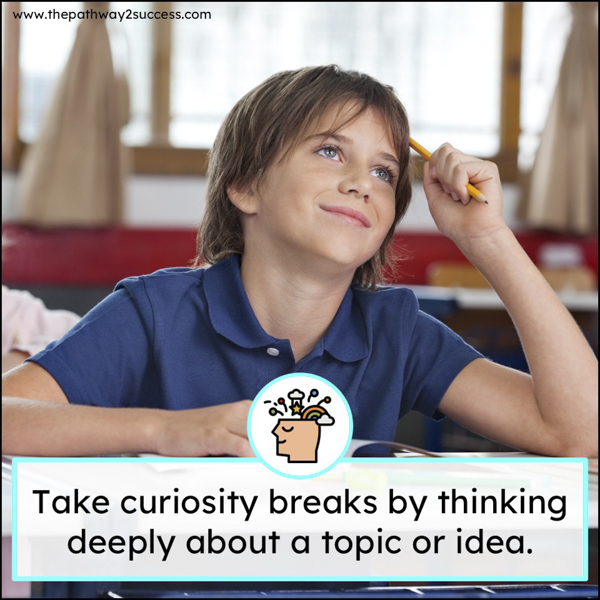
A curiosity break is time set aside to think, brainstorm, question, and wonder about a topic. To give this technique a try, just pause and think about a certain topic or item – it can be anything, even something you would consider “boring” like a water bottle. Direct your attention to that topic or item, asking questions that cause you to be curious. You might wonder: How exactly do they make water bottles? I wonder what happens with the materials of the water bottle when I recycle it. Where was this one made? Why is it designed exactly this way? I wonder if I could design a water bottle differently. What would mine look like?
With practice, this helps us learn to even the most simple and mundane things in life can actually be interesting if we give them some thought.
Give this a try with kids and young adults by introducing a topic, idea, or item. Encourage kids to independently think about that topic and come up with their own questions and thoughts. Set the timer and give them time to think on their own. Once the time is up, come back as a group and share. Not only is this a really fun way to work on how to be bored, it helps build skills for problem-solving, reflection, and attention.




Leave a Reply